







August 19, 2026 – Washington County, Wis. – The Wisconsin Department of Natural Resources (DNR) today two wild deer in Washington County tested positive for the virus that causes epizootic hemorrhagic disease (EHD).
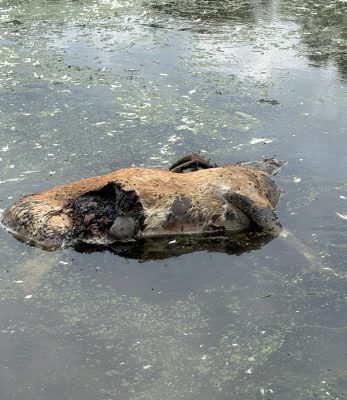
The deer were found dead near the village of Richfield and the city of West Bend. The DNR collected samples for testing after landowners and members of the public in the area reported a cluster of dead deer. Many of the observations reported healthy-looking, dead deer in or near water on their properties.

“Although it may be concerning to see many deer dead in a localized area, these outbreaks rarely have significant long-term population impacts on the overall deer herd,” said Erin Larson, DNR deer herd health specialist. “The short duration of these outbreaks and the robustness of our deer populations allow areas experiencing an EHD outbreak to recover quickly.”
The virus that causes EHD is spread by midges, which are small flies also known as biting gnats or no-see-ums. The virus does not infect humans, even if a person handles infected deer, eats venison from infected deer or is bitten by infected midges.

Clinical signs of EHD in deer may include excessive salivation, foaming around the nose and mouth and appearing weak or approachable by humans. Carcasses found in or near water sources may also be a sign, as infected deer become feverish and will often lay in water to cool down or drink.
How To Report Sick Or Dead Deer
Anyone who observes a deer that appears to be displaying clinical signs of EHD or is found dead in or near water is encouraged to share their sighting with the DNR. To report a sick or dead deer, please fill out the online Sick or Dead Wildlife Reporting Form, email DNRWildlifeSwitchboard@wisconsin.gov or call 608-267-0866and leave a message.
If reporting a suspected EHD case, please provide details about the date(s) of observation, the number of deer involved, the body condition of the deer/carcass(es), the exact location (including the county) and your contact information. The DNR only tests a limited number of deer, prioritizing locations within a new county or separate locations from where the disease is already confirmed this season. Reports of suspected cases are valuable to track the impact of the outbreak, even in situations where samples are not collected and tested and all reports are cataloged.
The EHD virus does not survive in carcasses, and DNR staff cannot collect or remove deer that are suspected to have died from EHD. When possible, the DNR also advises against handling found-dead wildlife carcasses, as other harmful pathogens could be present. If it is necessary to move or dispose of the carcass of a wild animal, be sure to use basic protective equipment (such as gloves) and follow good hygiene practices.
About Epizootic Hemorrhagic Disease
EHD is a seasonally common occurrence across the southern and western United States, occasionally showing up in the Midwest. It can be fatal to some deer, especially in populations that have limited previous exposure to the virus, such as in Wisconsin. EHD outbreaks are typically seen between the months of August-October and subside in late fall when the midges that transmit the disease die with the first hard frost.
The first recorded incident of white-tailed deer with EHD in Wisconsin occurred in 2002. There have been sporadic events documented since that time, generally with minimal localized impacts on deer.
Additional information about EHD, including more details on previous outbreaks, is available on the DNR’s EHD webpage.

August 17, 2026 – Washington Co., WI – Dead deer reports increase Washington County as DNR confirms EHD –
Reports of dead deer are mounting across Washington County, Wi, and the Wisconsin Department of Natural Resources has confirmed epizootic hemorrhagic disease (EHD) in a deer from the Richfield area.
The DNR has received an estimated 80 to 100 reports of deer believed to be part of the current outbreak, with about 98% of those reports coming from Washington County. Reports have been received around Richfield, Pike Lake, Hubertus, the Town of Erin, Town of West Bend, Town of Barton and West Bend, with reports also beginning to come in from northern Waukesha County.
Erin Larson, Deer Herd Health Specialist with the Wisconsin DNR, said the agency is investigating what she described as a “dual mortality situation” in southern Washington County.
EHD is a virus transmitted by tiny biting flies called midges, or “no-see-ums.” It is not spread directly from deer to deer.
A midge bites an infected animal and then can transmit the virus when it bites another deer.
Larson said there is no known risk to humans or pets.
She said cattle can contract the virus, but they are usually asymptomatic or experience only minimal signs.
“It doesn’t seem to be much of an issue with any other species besides cervids or the deer family,” she said.
What does an EHD-infected deer look like? According to Larson, the most common clue is where the deer is found.
She said, EHD causes a high fever, and deer often seek water. That means a deer found dead in or near a pond, creek or other water source may have succumbed to the virus.
“The main report we get in Wisconsin is a healthy looking deer found near water with no other signs of any possible reasons for its death,” Larson said.
Other signs can include an inability to move normally and excessive salivation or foaming around the mouth.
Larson said Wisconsin’s deer herd does not have significant levels of antibodies against the virus because EHD outbreaks are sporadic in the state.
“These deer will succumb very quickly to the virus within less than a week,” she said.
The end of the outbreak depends largely on the midges.
The tiny flies cannot survive a hard frost. Reports may begin declining before then, but Larson said the DNR cannot predict exactly when that will happen.
“We could continue to see reports or we could see a dwindling at some point, but for sure after a hard frost, then it pretty much goes down to zero,” Larson said.
Larson acknowledged the number of dead deer being reported now, is striking.
She said colleagues have reported areas where multiple dead deer are being found, with decomposition odors noticeable while driving through some locations. But she also offered some reassurance about the long-term outlook.
“While there certainly can be a short-term impact, there’s most likely not going to be any long-term impact to the deer herd in that part of the state,” she said.
This isn’t the first time Wisconsin has seen EHD as outbreaks were reported in 2002 and in 2024 when EHD was confirmed in four Wisconsin counties. Back then, the number of reported deer mortalities was much smaller, with the highest county receiving about 30 reports. Larson said the current outbreak is different in scale, with reports coming in “pretty fast and furious.”
The DNR wants residents to report sick or dead deer so it can track the size and geographic spread of the outbreak.
Larson said residents can find the DNR’s “What to do if you see a sick or a dead deer” page by searching the Wisconsin DNR website for “dead deer.” The DNR has a wildlife hotline where people can leave a message, as well as an email option.
Reports should include:
– The number of deer found
– The location
– Whether the deer was observed sick or already dead
– Contact information for the person making the report
Larson said the information is entered into an internal system. The DNR does not release people’s locations or personal information. The reports help the agency avoid double-counting and develop an estimate of how many deer were affected once the outbreak is over.
Once EHD has been confirmed in an area, the DNR focuses on documenting the number of dead deer rather than repeatedly testing animals from the same area.
Larson said the agency will collect another sample when reports come from a new area roughly 25 miles or more from a confirmed detection.
An interesting detail about the current outbreak
The first reports came in near the end of July, and the DNR is still organizing and cataloging the reports.
Larson said the agency had received an estimated 80 to 100 reports believed to be associated with the current outbreak, with roughly 98% coming from Washington County so far. Reports have also started coming from northern Waukesha County, including areas within about six miles of Richfield.
For the DNR, the current goal is to document the outbreak, determine how many deer are affected and watch how the number of reports changes as summer gives way to fall.
Report your sightings of sick or dead deer to the DNR Wildlife Hotline by emailing DNRWildlifeSwitchboard@wisconsin.gov or calling 608-267-0866.