



March 2, 2026 – Washington Co., Wi – The year was 1976. The winter was coming to a close and I was looking forward to spring. I was 19 years old. I lived in St. Lawrence, and worked in West Bend. I kept a journal of the unusual weather pattern that started on March 1, and later became known as the “Great Ice Storm” of 1976! Now, in 2026, on the 50th anniversary, I wanted to share my thoughts of what it was like to live through this unusual storm. Part 2 of the story is below.
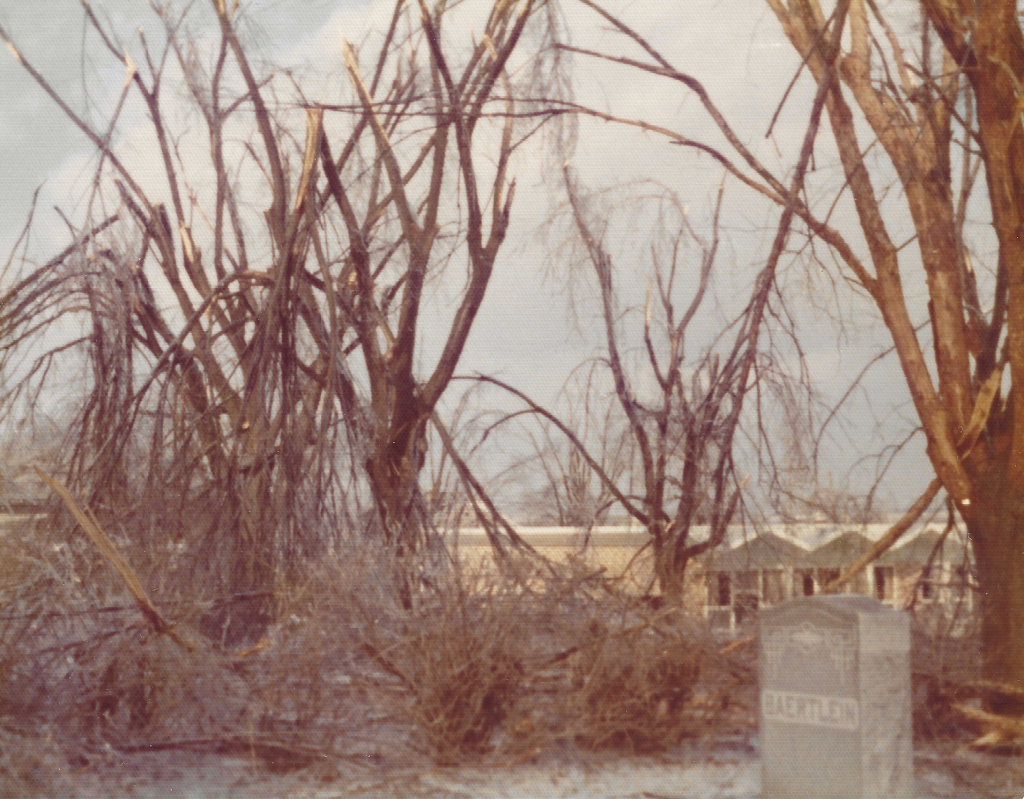
Frightened faces looked from one to another as they sat around the flickering flame of a candle wondering what would come next? Each movement of the wind sent another branch crashing with no regard to what was below. The mayor of the City of West Bend declared a State of Emergency. The Red Cross offered assistance.

Two hundred members of The National Guard were called in to help in many ways, including the distribution of dry ice. The National Guard was stationed at Badger Middle School. Most schools, if they had electricity and with the help of the Red Cross, transformed themselves into emergency centers for families who were freezing and needed shelter, food and help.
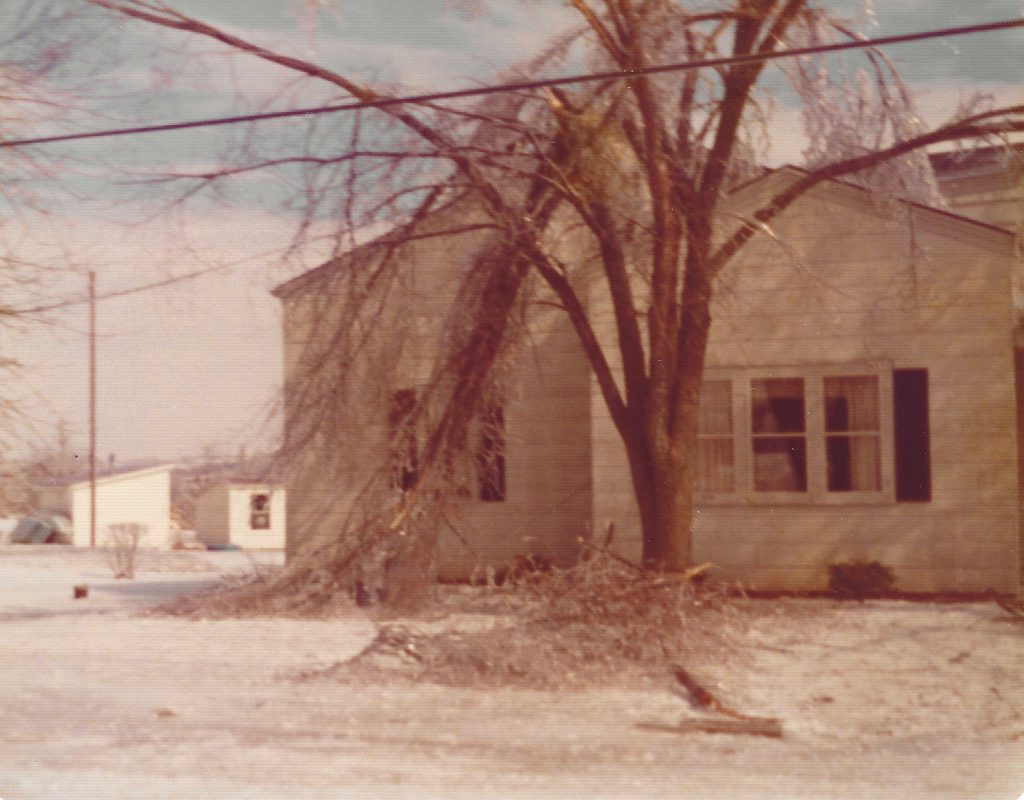
Silverbrook School housed 80 people each night. Prescott’s Super Valu made an announcement at approximately 3 p.m. on Friday, that a large shipment of dry ice had just arrived. Frantically, people raced to Super Value to try to do what they could to save the food in their freezers.
Click HERE for Part 1: 50-year anniversary of 1976 ice storm
There was one medium sized U-Haul trailer. People lined up dozens deep around that trailer. The desperation was apparent on their faces. Within 10 minutes, the load was empty and many were sent away empty handed.

Power in the rural areas was completely wiped out as miles of power poles toppled over like dominoes under the weight upon them. It was estimated nearly 1,500 utility poles were down in the county.
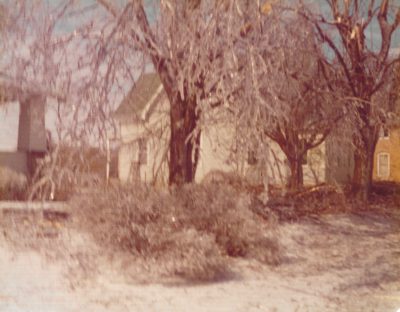
The farming community had even greater concerns. Most farms did not have water for the cattle because the pumps were run by electricity. Local fire departments went from farm to farm and rescued the thirsty animals by pumping the water tanks full.
I knew of a farmer who had purchased a generator just months prior to the storm. In the fall of 1975, a small bird shorted out the transformer on their farm and the power went out.
Ironically, a generator salesman just happened to stop that day. A sale was made. They luckily were able to use that generator to run their farm during the storm. After the fact, they often said “I guess a little bird told us that we needed to invest in a generator!”
It was business as usual if you were one of the lucky ones who had a generator. You just had to keep the tractor full of fuel. Those farms were self-sufficient, often sharing their generator with neighboring farms that did not.
The cows had to be milked twice a day to keep the herd healthy. Road conditions made it extremely difficult for milk truck drivers to get to the farms to pick up the milk. Some farmers had to dump their milk. There was no electricity for the electric fences.
Farmers hoped their animals would not escape which would add more chaos to the already difficult situation.
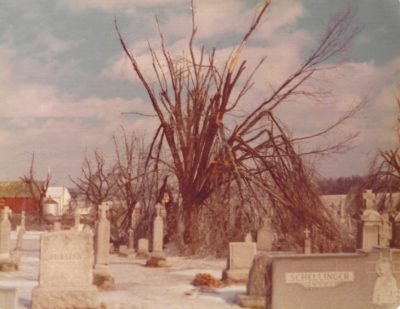
Across the county, miles of roads were still closed due to the massive piles of debris scattered from the damaged trees. All major highways leading into the county were blocked.
The National Guard stopped and asked drivers for an ID. If you were not a resident, you were turned away. Semi-Trailers were not allowed for fear they would rip down the remaining wires.
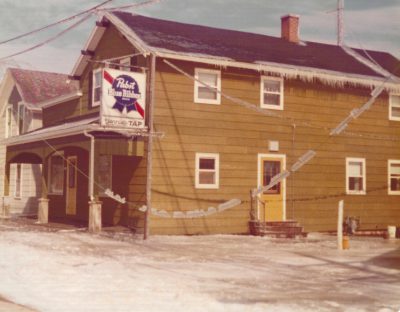
Electric crews worked day and night, barely taking time to eat and sleep. The work that was done one day, was destroyed the next by the continued force of the wind. Electrical crews from nearby states were sent to help.
By Saturday, March 6, the winds had slowed. The electrical crews breathed a sigh of relief as they saw a glimmer of hope on the horizon. Over time, the lights within the homes lit up again. People stared out the windows with great anticipation as neighboring homes slowly got their power restored.
Most of the county’s larger cities were restored by Sunday morning, March 7, 1976. Rural folks moved in with friends in the city who now had power. Rural areas were still dark. Some feared it might be weeks before all power would be restored.

On Monday, March 8, the schools remained closed. Factories were asked to stay closed because of the strain on the power system. Governor Lucey visited the area on Tuesday, March 9. He was here to assess the unbelievable amount of damage from the ongoing storm.
The utility crews no longer faced the wrath of the rain and the wind. Power poles and lines were replaced. Thousands of people who were powerless had the comfort of electricity by night.
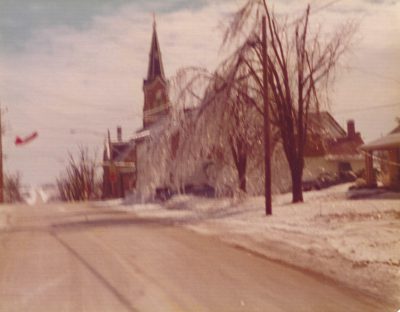
The worst ice storm that I can remember over the past 50 years, was finally coming to an end. Some folks were out of power a day, others for more than a week. Some farms were out of power for up to 10 days.
Schools reopened on Wednesday, March 10. Most people returned to work. After the lights came on, some called this storm “A once-in-a-lifetime experience!”

For me, it gave me a new appreciation of the things we easily take for granted. Simple things like a fresh cold glass of water, and a warm cozy bed. Without a doubt, it also showed the resilience and strength of a community as leaders assembled an action plan to provide help to those who needed it.
Without hesitation, neighbors and friends stepped in to help each other in every way possible! For the many thousands of people who were out of power across Washington County and the state for what seemed to be an eternity, this was something they will never forget. And I have not forgotten!
On a side note: While working with Debbie Hoefert on this article she shared quite a few more off-the-cuff memories. Those are posted below.
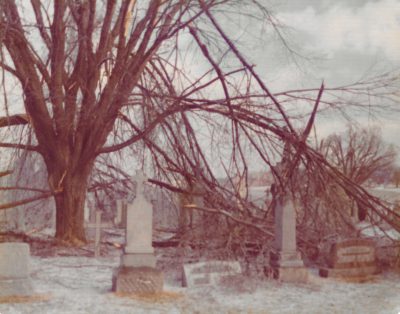
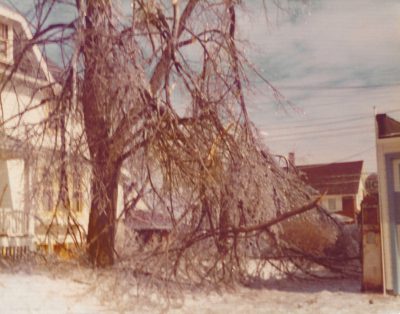
About the author: Debbie Hoefert is a lifelong resident of Washington County, Wi.
Below is an accounting of the 1976 ice storm by the National Weather Service.
Final Ice Storm 1976Click the arrow in the lower left corner to advance the page.




I was in High School at that time. I sat behind President Ford at the high school as he declared the area a disaster area. I held my instrument and my friends as well. When President Ford turned around to shake our hands, my friend shook his, but I was holding his and my instrument and no free hand. I will never forget.