




February 28, 2026 – Washington Co., Wi – The year was 1976. The winter was coming to a close and I was looking forward to spring. I was 19 years old. I lived in St. Lawrence, and worked in West Bend. I kept a journal of the unusual weather pattern that started on March 1, and later became known as the “Great Ice Storm” of 1976.
Now, in 2026, on the 50th anniversary, I wanted to share my thoughts of what it was like to live through this unusual storm. Part 1 is below and Part 2 will be published on Sunday.
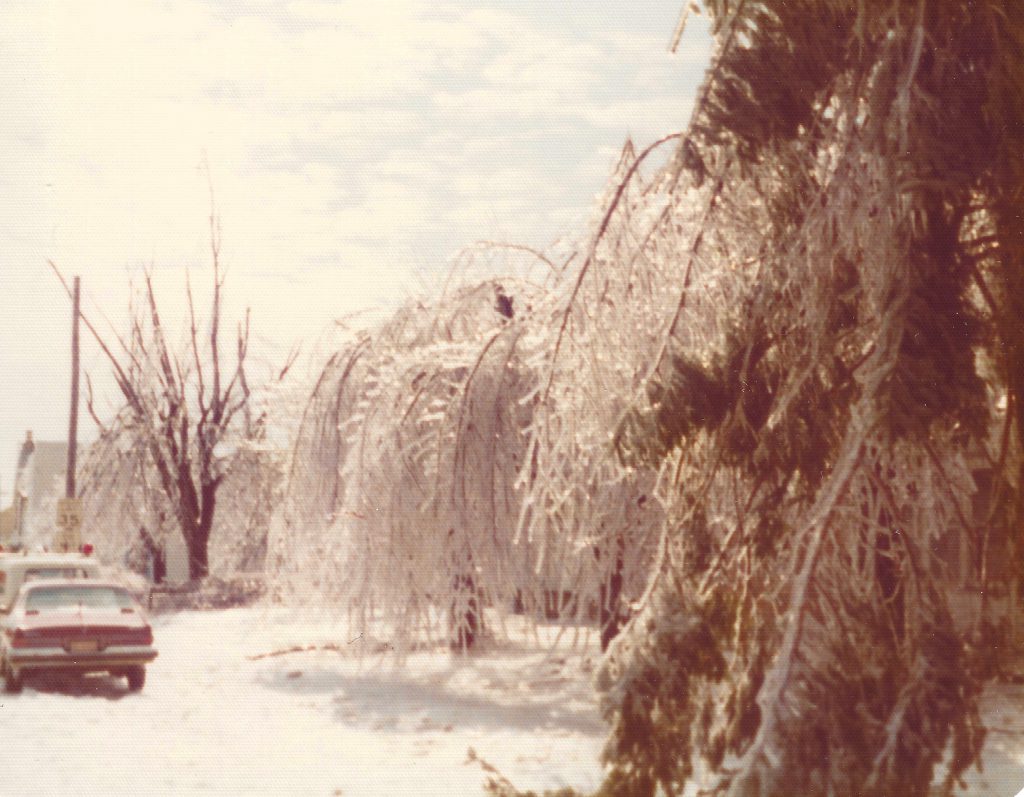
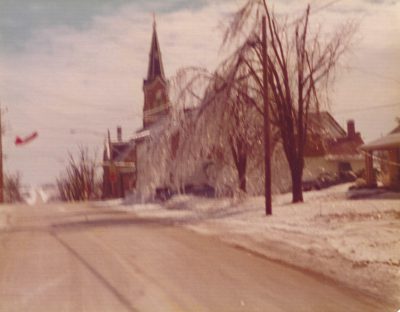
It all started Monday, March 1, 1976. Snow began like the usual snowfall during March. No one thought anything of it. Temperatures began to rise slowly and eventually the fluffy white stuff had turned to wet and cold freezing rain. It was not hail. It was rain; but as it hit the ground it turned everything in its path into a glazed mass of ice.
“We have had ice like this before,” said travelers as they scraped their car windows. The people moved around like normal but with less speed and more caution. Everyone thought it would diminish overnight. By morning, surely the sun would shine and the ice would melt.
The ice covered much of southeastern Wisconsin and beyond. As the rain fell, everything was covered by nearly an inch of ice.
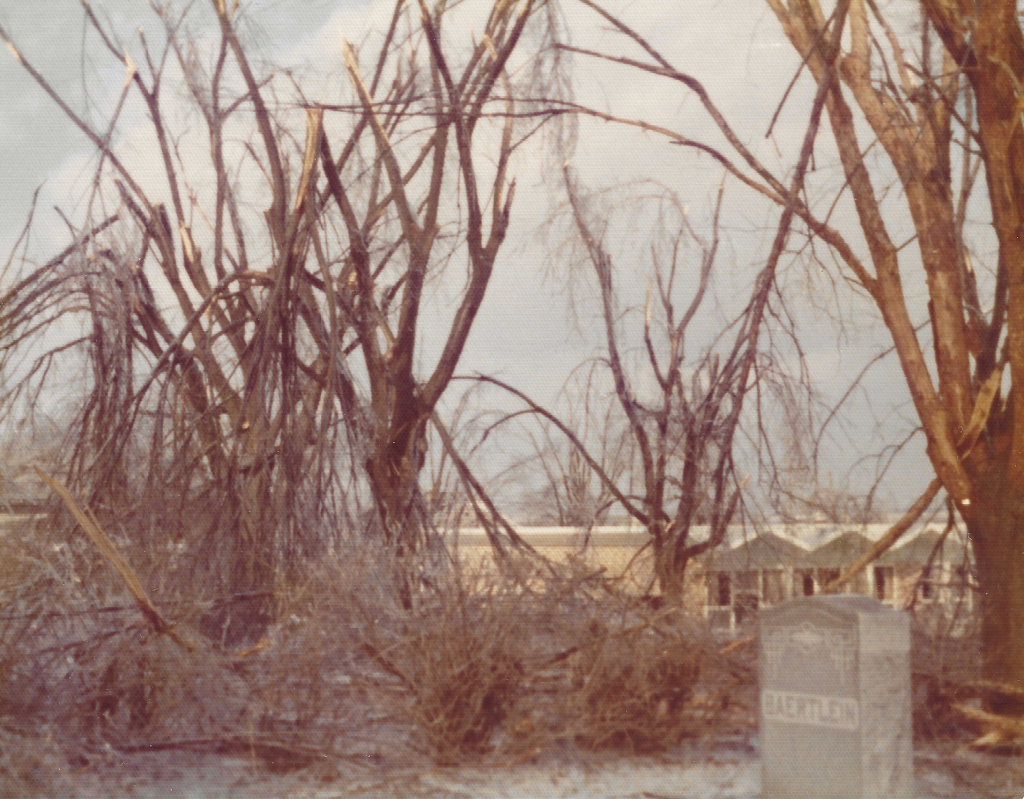
The icy precipitation did not end, but instead continued throughout the night. The temperature stayed in the danger zone, just between snow and rain. Fingers of ice draped from road signs and fences, transforming them into strangely shaped objects.

The sky remained a dull and dreary shade of gray as the ice continued to accumulate. Glistening ice-covered tree branches began to sag with the tremendous weight upon them. People looked to the sky in disbelief as huge branches were falling all around them.
People on their way to work had to allow extra time to scrape the inch of bubbly ice off their windshields. Walking anywhere was almost impossible and each safe step was a huge accomplishment.
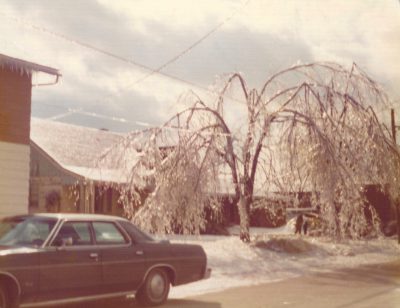
Schools closed and the community slowed. By noon on Tuesday, March 2, 1976, the City of Hartford issued an alert and told the people to go home and stay home. Warnings blared from the radio. “Do not walk or drive unless it is absolutely necessary. There are already live wires on the ground. If you must travel, do so with extreme caution!”
By this time, roads were becoming impassable from the falling branches and downed power lines. Travelers would encounter wires hanging so close to the ground that a car could not pass through. Factories and businesses closed.


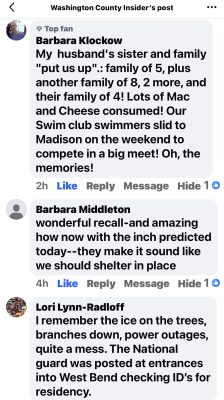

By Wednesday, March 3, the amount of rain seemed to slow, but ice was still thickly covering everything. Utility crews worked to restore power, making some progress. It was a futile attempt, given the widespread problem.
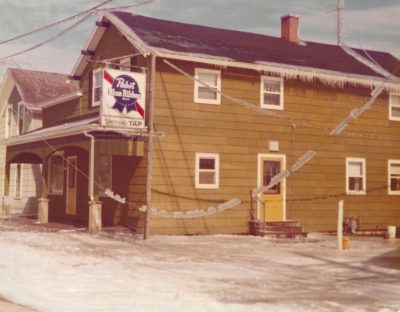
Some people were now out of power for several days. Homeowners became concerned with how to keep the food in the refrigerator and freezer from spoiling.
The radio stations cautioned people to leave your refrigerator and freezer door closed as much as possible to maintain the cold. Safe food guidelines were posted in the West Bend News.

The city began giving away dry ice to help preserve food. Temperatures were in the low 30s, so keeping warm was another huge problem. Campers scattered to the basement to dig out Coleman stoves. Antique lovers could rely on kerosene stoves.
Firewood sold out in every store. Preparing meals was very challenging. By nighttime, as darkness fell over the ice-covered land, it was apparent this was not going to end any time soon.
On Thursday, March 4, another storm was predicted and this time it was expected to be even more catastrophic. As this storm hit, even heavier precipitation fell. The ice on surfaces increased to several inches thick.
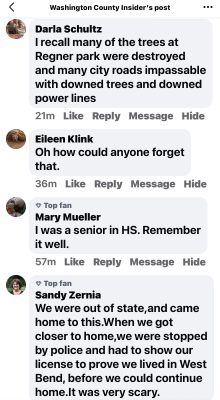
By Friday, March 5, the rain stopped but fierce winds started. Wires that were still hanging were whipped back and forth. Some wind gusts exceeded 50 mph. Eighty-five percent of the county was without power. Obtaining fresh water was difficult as well pumps were run by power. The hospital was running on generator power. Governor Patrick Lucey sent emergency generators to provide some relief.

The trees continued to fall aided by the tremendous winds that would not subside. One person who lived in a house surrounded by woods said, “It was the most frightening experience I have ever had. Every time my nerves would calm down, another loud crash could be heard as wires were ripped right out of my house and tree branches crumbled to pieces as they avalanched off my roof. I was afraid to put my kids to bed!”
Frightened faces looked from one to another as they sat around the flickering flame of a candle wondering what would come next? Each movement of the wind sent another branch crashing with no regard to what was below. The mayor of the City of West Bend declared a State of Emergency. The Red Cross offered assistance.
Two hundred members of The National Guard were called … Part 2 of the article on Sunday, March 1.
What are your memories of the ‘Great ice storm of 1976?”




Just like that, the schools closed. Out in the parking lot, thunder and lightning, and rain. Around supper time, my paternal grandfather had a stroke. That night, our power went out, and the cold set in. Dad found a small gas generator that ran the fan for the furnace and a lamp. A neighbor had a gas water heater, and offered showers. We spent a lot of time at their house.
I had my 2nd daughter during this. Had to move by someone with heat to keep warm.
My family of 5 along with much of my dad’s family all stayed at my grandparents’ house since they had an oil burning furnace and a stove that burned wood, along with an outhouse! I was 9. For me it was great fun since I got to spend a week at my grandparents’ house with many of my cousins. We played lots of games and didn’t have school. As kids we had no idea of the seriousness of the situation. I’ll always remember that week.
I recall a connecting power pylon came down in Farmington. We were out of electricity for 10 days. Electric lines were sparking on the roads.
An inch of ice on tree branches.
We stayed by farming neighbors because they had a generator.
I remember it well we were milking we had to chase the cows down in the field so they could get we had to break the ice we were out of power for a week we had to stir the milk by hand we had a gas furnace it didn’t do any good no power the gov.wouldnt give us a gen.we were too small.
My Wife and I with 2 young boys were lucky enough to have lived on Washington Street in West Bend. The power lines also went to St. Joseph’s hospital, so We never lost power. My Brother with His Wife and Son were not as lucky. They lived just a few blocks away on 10th Ave. and had no power for several days, so We had Them stay with Us until They could move back to Their house. My Mom & Dad and My Wife’s Mom & Dad lived in Newburg and were out of power for 11 days.