






November 18, 2025 – Salt Lake City, UT –Chasing speedskater Jordan Stolz along his ISU World Cup tour brought me to Salt Lake City—but it was the algorithmic tides of social media that launched me into an unexpected detour: a newly opened Titanic exhibit tucked inside the mall at The Shops of South Town.
A strip mall hardly seems the place for an encounter with Edwardian luxury, maritime engineering, and one of history’s most enduring tragedies—but stepping inside felt like boarding the RMS Titanic herself.

What I found was a surprisingly rich, storytelling experience loaded with details even Titanic buffs might miss.
 The exhibit begins with Titanic’s birth—a ship so advanced, designers felt it could be “sliced crosswise into three pieces and each section would still float.” That was the confidence of White Star Line in 1908, when luxury and safety were its selling points.
Titanic dazzled with innovations rare even for the elite: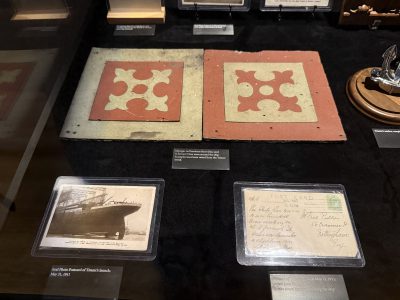
-
Private bathrooms (a luxury in 1912)
-
Turkish baths with exotic tiling
-
Electric elevators
-
And second-class cabins so comfortable they rivaled first class on other ocean liners
Walking among replica staterooms in the exhibit, you understand why the world considered Titanic virtually unsinkable.
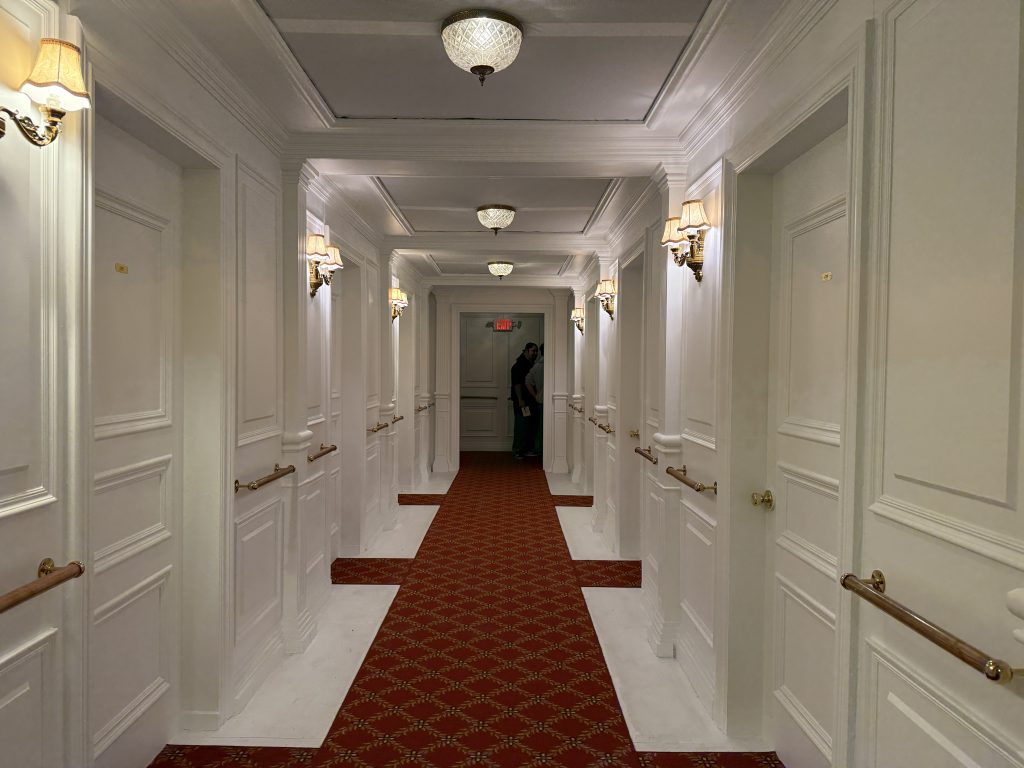
Construction photos and steel samples tell another story:
Titanic’s hull was held together by over 3 million rivets, and by October 1910, every steel plate was in place. But the exhibit explains a chilling detail discovered only after the sinking:
When hot rivets were driven into cold, unheated steel, the plates could become brittle. This unintended weakness, unknown during construction, and according to the exhibit this “may have worsened the ship’s damage when she struck the iceberg.”
One of the exhibit’s most captivating displays is a compilation of grainy film clips from April 1912:
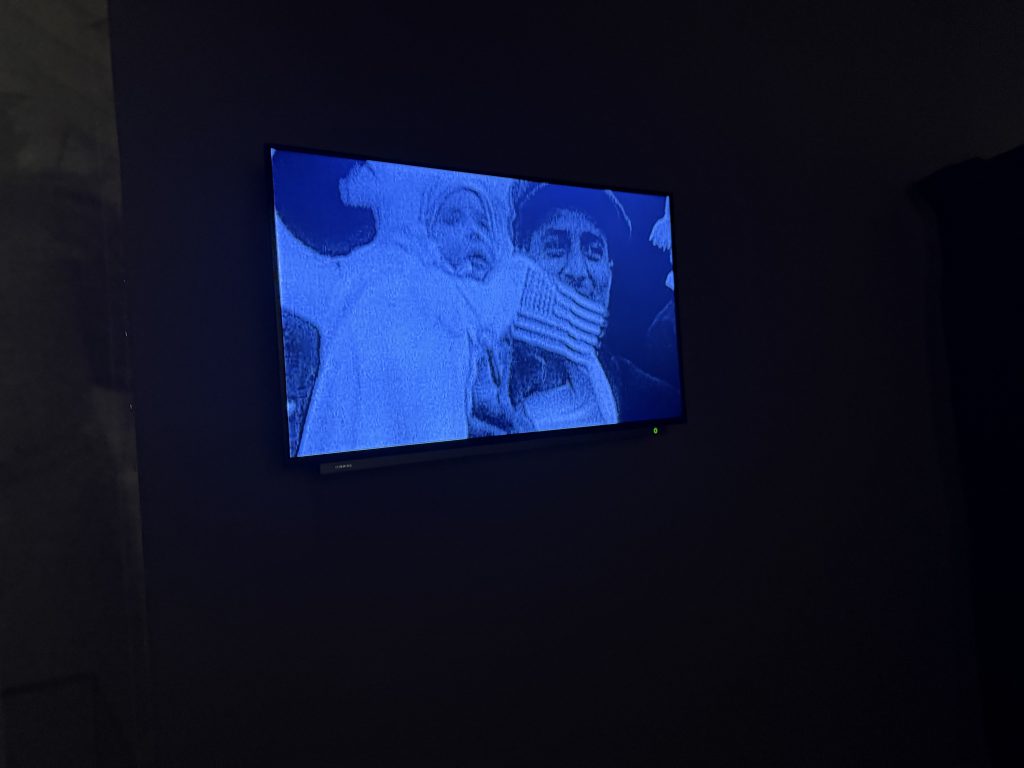
A man waves a flag vigorously while holding a baby wrapped in a handmade gown and bonnet. People in straw derby hats and fur boas wave white handkerchiefs from the pier. Passengers step out of antique motorcars; stewards load wooden crates. Women in heavy furs and men in square-shouldered coats stroll the deck.
It’s an intimate window into a world already more than a century gone.
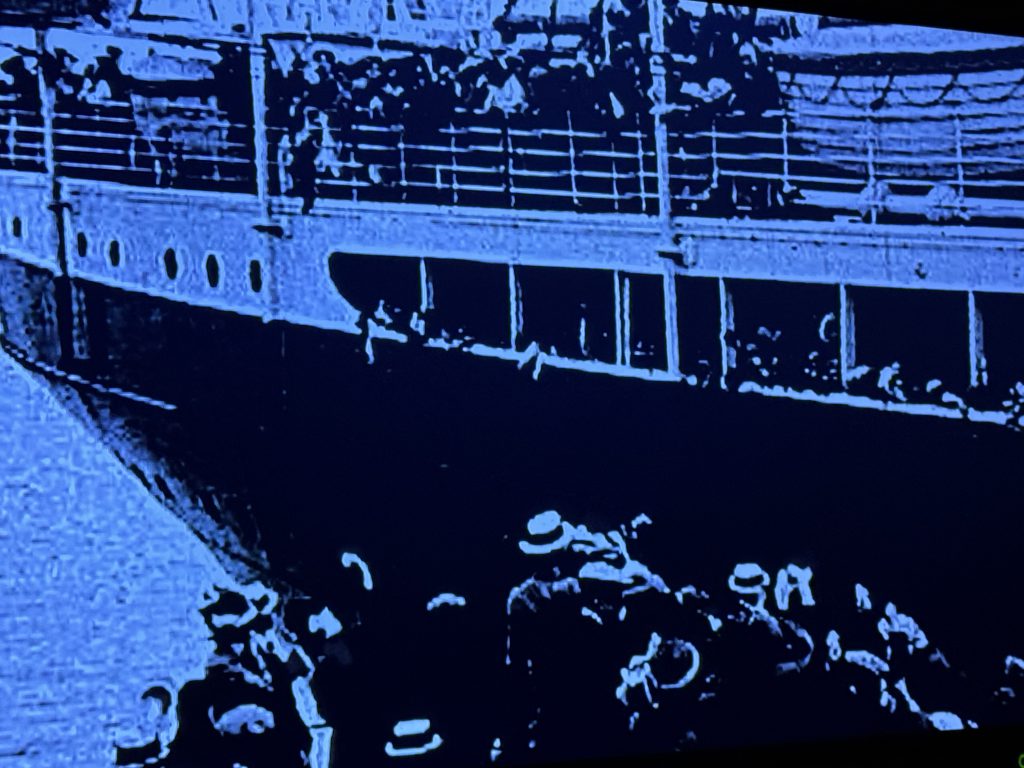
Titanic officially began her maiden voyage April 10, 1912, departing England and making stops in France and Ireland before turning toward New York with 2,224 people aboard. But danger followed her from the start:
-
As she left Southampton, she nearly collided with another ship.
-
A coal bunker fire—a not-uncommon issue on steamships—was burning slowly in her hull.
-
The Titanic picked up and dropped passengers at Cherbourg (France) and Queenstown, now Cobh (Ireland), before heading into the open North Atlantic.
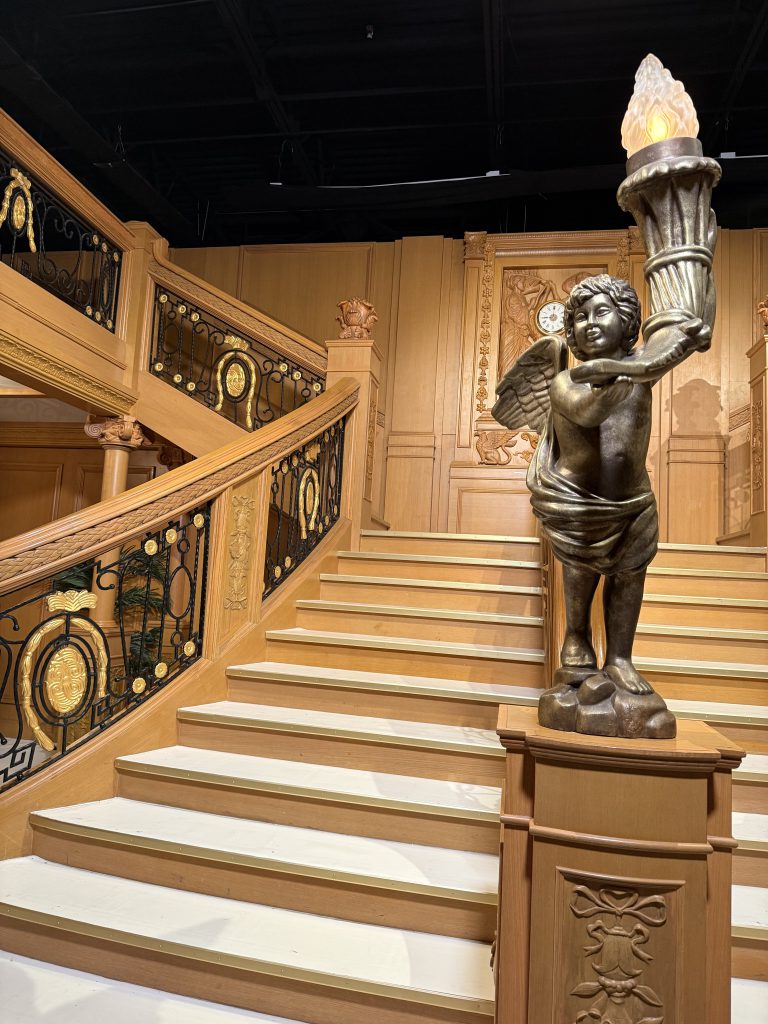
One gallery recreates Titanic’s most iconic space: the Grand Staircase.
The real staircase swept from A Deck to F Deck, lit by a bronze cherub lamp, crowned with a 12-foot carved panel of “Honor and Glory Crowning Time” by Belfast woodcarver Charles Wilson.
The exhibit points out a surprising fact: most photographs people believe show Titanic’s staircase were actually taken aboard Olympic, her nearly identical sister ship.
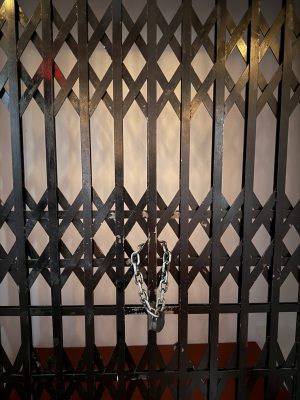
James Cameron’s film with Leonard DiCaprio and Kate Winslet, Jack and Rose, engraved into the public mind the idea of third-class passengers being intentionally locked below deck after the collision.
The exhibit clarifies the truth:
-
The gates were always locked—but only to prevent unauthorized mingling between classes.
-
When the collision occurred, those gates remained locked out of routine, not malice, unintentionally trapping many lower-class passengers during evacuation.
An architectural model showing the locations of the gates is one of the exhibit’s most sobering displays.
Visitors can stroll along a reconstructed first-class promenade—500 feet long on the real ship. Here, wealthy Edwardians once relaxed in deck chairs, strolled in the sea air, and engaged in an unspoken ritual:
Mothers strategically placed their daughters in high-traffic areas hoping they’d catch the eyes of eligible bachelors.
The session on the sinking vividly explains something hard to imagine: Ice is 0°C, but in the North Atlantic on April 15, 1912, the ocean was two degrees colder than freezing, remaining liquid only because of its salt content.
It was lethally, instantly cold.
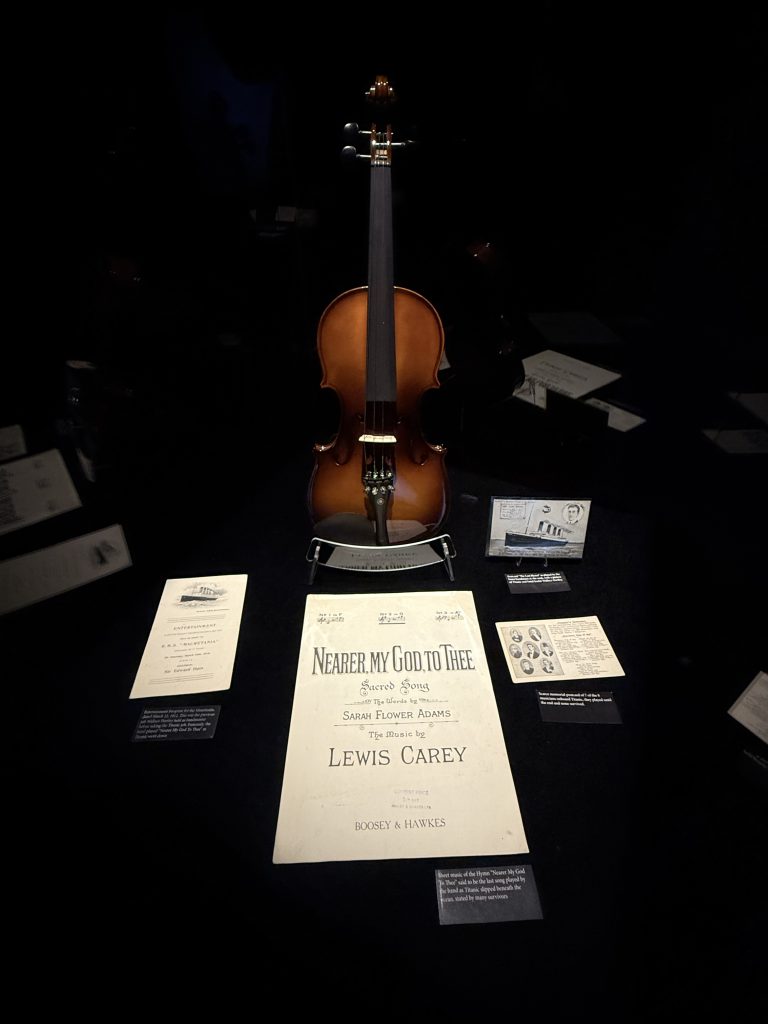
A display of sheet music pays tribute to the band who played as the ship sank—many survivors insisted the final song was “Nearer, My God, to Thee.”
The final rooms shift to 1985, when the wreck was finally located after being lost for 73 years.
Guests were reminded to “watch your step” as the floor shifted to walking on squares of glass meant to resemble the ocean floor. Underneath was waves of sand strewn with treasures that had slowly fallen from the Titanic, which rests upright in two massive sections, 13,000 feet down.
Scientists believe the bow filled with water and sank mostly intact, while the stern imploded under pressure, descending in a corkscrew motion and hitting the seabed with catastrophic force.
The debris field stretches across the ocean floor—everything from luggage to fine china to five of the ship’s 29 boilers.
One of the most extraordinary facts in the exhibit is about rusticles—rust formations resembling stalactites:
-
They contain 27 strains of bacteria, including Halomonas titanicae.
-
These microbes are actively eating the ship, turning the steel into powder.
-
At the current rate, Titanic may disintegrate completely within 50 years.
In the closing section, oceanographer Dr. Paul-Henri Nargeolet’s words echo softly through the room:
“The wreck is not just steel and rivets. It is a sacred place. You feel the souls of those who were lost.”
Photos courtesy Imagine Expeditions
April 15, 2024 – West Bend, WI – April 15, 1912 is the historic date of the sinking of the British ocean liner Titanic into the North Atlantic Ocean.
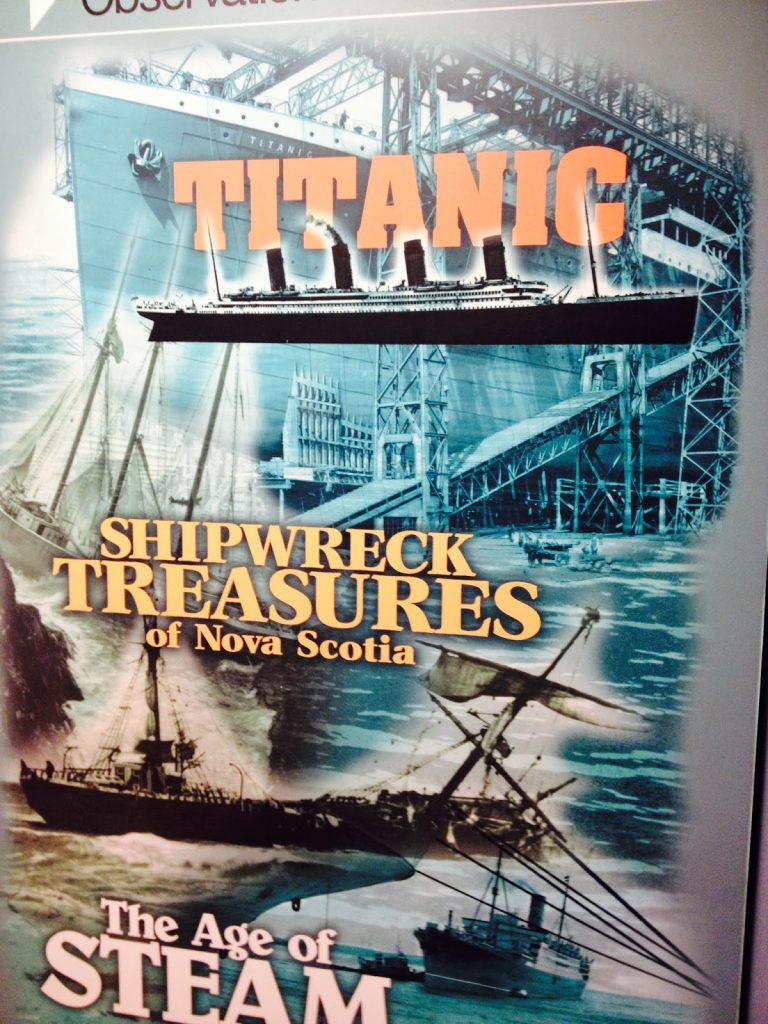
In 2014 I flew to Nova Scotia to pedal home on my annual bicycle tour. On my first day in Halifax I visited the Maritime Museum. There was lots of great history and artifacts about the Titanic and the museum documented the key role Halifax played in the disaster.
Although the maritime city was about 700 miles from where the Titanic went down, it was the closest land port and the primary site for the recovery effort.
Click HERE to SUBSCRIBE to FREE local news at
Washington County Insider on YouTube
The Maritime Museum in downtown Halifax has a detailed display on the recovery of victims of the Titanic. Many were brought to the small lakeside community of Halifax.
To set the stage for the gritty story of the recovery there are displays of items from the ship and small details about the vessel itself such as the steel plates used in construction of the Titanic were fastened by 3 million rivets. The steel however contained high levels of sulfur which made it brittle at cold temperatures.
Many pieces at the museum were recovered by Capt. W.G. Squares de Carteret of the cable ship Minia. Wreckage included a piece of cabinetry, a deck chair and sections of carved wood from the landing of Titanic’s staircase. The dark wood features an egg-and-dart pattern from the second- class smoking room.
The cabinetry is the only piece known to have survived the Titanic. Floating wreckage was found by the ships that recovered bodies of the victims.
Piles of coffins were brought to the wharf in Halifax. There were strict class barriers; first class passengers were moved in coffins. Second and third in canvas bags and members of the crew were taken off in open stretchers. Hearses and wagons took bodies to a temporary morgue at the Mayflower curling rink.
Forty undertakers were on hand. Halifax buried 140 victims, including the nameless. Three churches handled the funerals.
Francis Dyle was quoted on May 3, 1912, saying, “I honestly hope I shall never have to come to another expedition like this. The doctor and I are sleeping in the middle of 14 coffins.”
Josyann Abisaab, whose great grandfather died on the Titanic, shared more insight in an article, “The Halifax-Titanic Connection.” A portion of that story is below.
Cable ships were mobilized after the Titanic tragedy because they were well equipped with wireless telegraph and large storage areas to hold the victims. Sadly, the brave men on the cable ships that set sail from Halifax with a cargo of ice, coffins, embalming fluid and canvas bags, would soon learn that the grim task of recovering Titanic victims would not be easy.
The four ships sent from Halifax to pluck the victims out of the frigid waters recovered a total of 328 bodies, of which 119 were buried at sea. The bodies of 59 of the victims were reclaimed by their families. The remaining 150 were buried in three cemeteries in the city.
The Titanic victims were somberly unloaded at the Flagship Wharf on the Halifax waterfront, church bells tolled, and horse-drawn hearses owned by Snow Co. carried the coffins to the morgue. The city, with much of its center draped in black bunting, went into mourning.
Click HERE for more details on the Maritime Museum in Halifax.
Sidebar story: While digging through my travel journal for the Halifax-Titanic story I came across another gem from that same bike tour.
Butterbox Babies
Since I arrived in Halifax 12 hours late I was already behind my self-imposed schedule.
Air Canada managed to help hail a shuttle to the Maritime Museum in downtown Halifax about 60 miles away.
My driver was Bill Sullivan, a happy-go-lucky guy with three-days growth of gray stubble, a Bluetooth in his ear and a plastic-looking wood cross around his neck.

“I left school when I was 11 to get a job,” Sullivan said with a blended Nova Scotia/ Boston accent.
Sullivan delivered telegrams on a bicycle.
“We had a uniform and everything,” he said describing his cap, boots and tunic. “I delivered a birthday message to an old woman. She stood in the doorway and said, ‘Aren’t you supposed to sing?’ Then I had to deliver a telegram with a black border. I got to the lady’s home and she knew right away.”
The woman said, “Ain’t you supposed to ask me if I’m alone?” Sullivan said he did. “Ain’t you supposed to come in and set with me?”
Sullivan said he did — for a while. The woman left the telegram lying on the table unopened.
“Craziest thing I’d ever seen, her eyes welled up, but she never cried one tear,” he said confirming the woman’s son had been killed in the war.
Sullivan, 73, was great at conversation. He kept it going. No sense in silence when it could be filled with a story.
“You familiar with the Butterbox Babies,” he asked? “There was a dairy that sold butter in boxes and those boxes were the perfect size for a coffin of an infant born at the Ideal Maternity Home.”
The outfit was in an eastern province of Nova Scotia in the 1930s and ’40s.
“That couple, the Youngs, would take in unwed mothers, charge them $500 a week and either tell them their baby had died and then sell it or they eventually did die because all they fed the babies was molasses and water,” he said. “I was one of those babies, but I was adopted.”
Sullivan said he bounced around to a number of foster homes including a family in New Jersey.
When that story about the Butterbox Babies came out, the kids that survived started finding each other,” he said. “We had a reunion recently and 120 of us showed up.”
Sullivan confidently drove through traffic. He wore rectangular glasses and had a collection of sunglasses hanging from the visors in the van.
“You into cowboy movies?” asked Sullivan, not waiting for an answer. “What was Tom Mix horse’s name?”
Old Westerns. That was another one of his passions. “Tony. Tony the Wonder Horse,” he said with assurance.
“You know any cowboys?”
I fumbled a weak guess of Ronald Reagan. Apparently, he wasn’t big enough to have his own horse with a name.
“Gene Autry; now there’s a cowboy. What song was his most famous?” grilled Sullivan. “You sing it once a year … .”
I was about to blurt out “Happy Birthday” but Bill couldn’t wait for my incorrect answer so he started singing, “Rudolph the red-nosed reindeer … .”
He was so proud of himself, but he wasn’t smug.
“Gene Autry’s horse was Champion. How about Roy Rogers — what was his horse’s name?”
The cowpoke trivia continued. “Trigger,” he said quickly. I knew that one but just blanked and Bill wasn’t big on a three-second pause or allowing me time to phone a friend.
Arriving at the Maritime Museum I knew I definitely needed to work on my equine movie history.
Sullivan was a gracious driver. He helped unload my bike and was eager to pose for a photo before hitting the dusty wagon trail again.