



West Bend, Wi – Dave Bohn was born in 1929, at the start of the Great Depression on a farm on the outskirts of West Bend, Wi. Dave wrote memories of his childhood for over 15 years. While Dave is no longer with us, he still has many more stories that he wrote that he wanted to share. His hope was that his writings would preserve the often overlooked stories of ordinary farmers and everyday farm life in rural Washington County during the Great Depression through the eyes of a local farm boy.
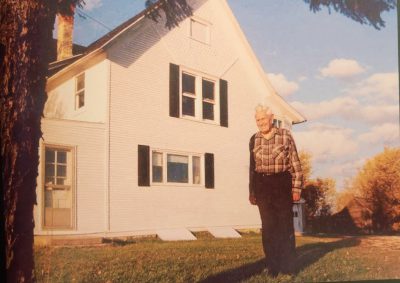
This is the story of my home during the Great Depression. I hope this story can be passed on to future generations to show how life was for a child growing up in the Great Depression in the 1930’s and how we lived life in the following years to how life is now.

In the early 1900’s, my dad’s family lived in Cedar Creek. Around 1912-1914, my grandparents moved the family to Hwy P. That is when they bought the farm that I grew up on.
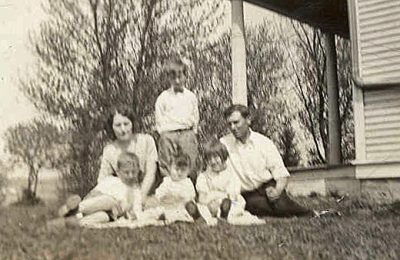
According to Grandma, the house on our farm was not to be lived in, as the people who had lived there before my grandparents had tuberculosis. At that time, people would not live in a house where someone with tuberculosis had lived. Grandma told us that she wouldn’t buy the farm but then the house burned down.
I don’t know if that was before or after my grandparents bought the farm though. From what I know, the house that I grew up in was built on the same foundation as the original house.
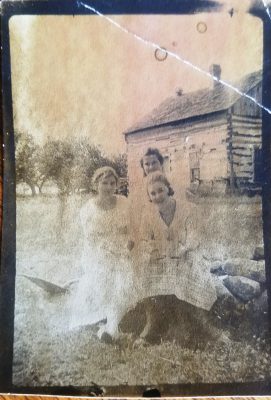
There was a small old log house by the silo where my grandparents and the family lived while the new house was being built. This was not a big house. I really don’t think it was much of a house at all from the pictures we do have of it. My dad was probably around 14 years old when they lived in that log house.
They had seven people in their family and since my aunts and uncles were all teenagers, I imagine it was quite crowded in that log cabin. When the new house was complete, they moved in. I would guess around 1914 or so. This was the house where I was born in 1929.
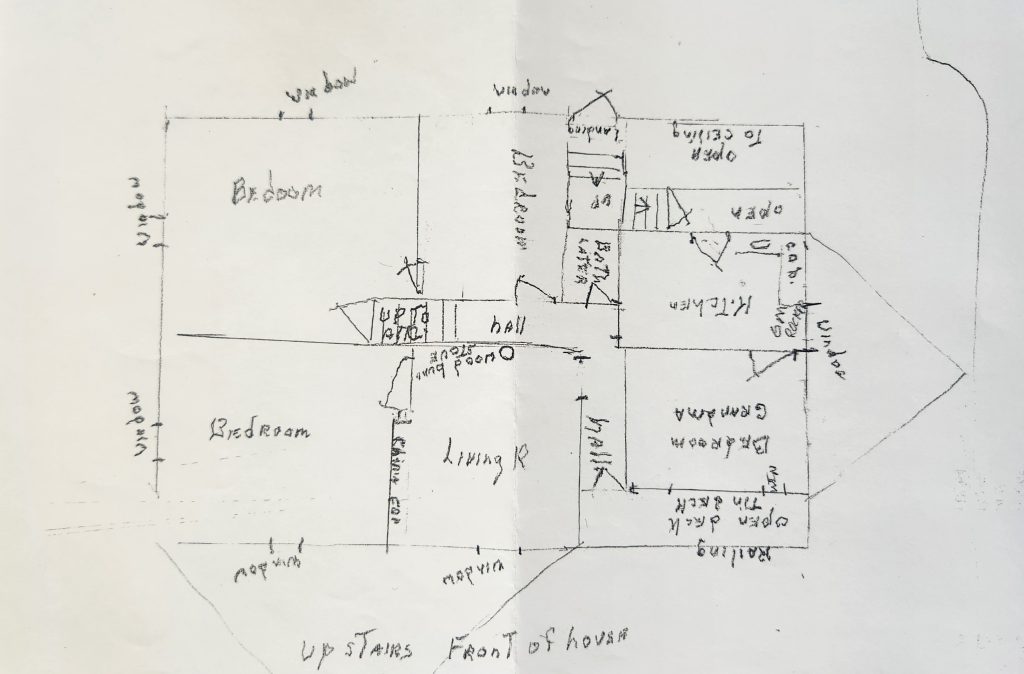
The new house had an upper level that was its own apartment. Since there were really only two bedrooms on the main level of the house, my dad and my two uncles took the upstairs quarters. My two aunts and my grandparents slept in the bedrooms on the main level.
I don’t know why they built it like this, but this was a time when aging parents lived with their children’s families. And that is what happened in our family. Grandma and Grandpa lived upstairs from us when we were kids.

Our kitchen on the farm was quite large. We spent all our time in the kitchen because it was warm there. On one side of the kitchen, we had a couch or a cot, just like an army cot. This was always in use in the wintertime, as we had more time, just laying on it or resting or sitting on it. In the summer it wasn’t used as much as in the winter, when there wasn’t as much work to do.
We did have a large standing radio in our kitchen. This was the radio we would listen to for the news, the farm reports, the Cubs games, and all of the old radio shows of the time. The Cubs were not good then but we listened to them and I got to like some of them.
During the school year after dinner, we would all sit at the kitchen table and work on our homework. Mom would sit at the table with us and help us with our lessons when we needed it. She would read us a fairy tale once in awhile. I remember her reading us Hansel and Gretl.
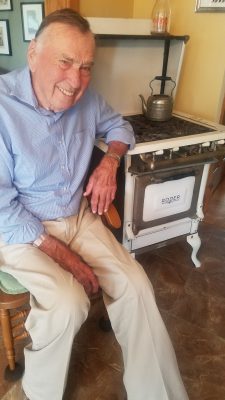
Mom would do most of her cooking on a coal fired stove during the winter. This coal fired kitchen stove, along with an oil burning stove in the Living Room, which wasn’t lit unless we had company, were used for the heat source in our home on the main level of the house.
Houses at this time were heated with coal or wood. If the farm had a forested area on it, rural houses were heated with wood. Our farm had no woods, so our fuel was coal. Most houses that were heated with coal had some type of central furnace with a coal chute from outside of the house, so that coal could be delivered and stored near the furnace. We never had a central furnace in our house, just the coal fired kitchen stove, so we kept all the rooms closed off.
We did not have anyone deliver the coal to our house for the winter months. Dad would hitch our two wheel trailer to the Model T car and go to West Bend to buy coal. We took the coal home to a small wooden building near our house, about 8’x8’.
The coal was brought in at night. We had a coal bucket that was used to bring the coal into the house. This always was next to the kitchen stove. Dad would bring the coal in until we got big enough to handle a bucket of coal. Then it became our job.
In the winter months, the coal fire in the kitchen stove would have burned out by the morning. Dad would get up early and light a fire in the coal fired Roper kitchen stove, before heading to the barn for milking and feeding the cows and animals. We got up a little later and by that time, the kitchen was warm.
When burning coal, Mom would always worry about gas forming inside the house, as coal would give off a gas, so a good stove chimney is a must to get these fumes out.
Our kitchen did have a light of gas and this gave off good light. This gas light was a ceiling light and it had a special light bulb that gave off a white light which was brighter than the yellow light of today. The gas light would have to be lit every night with a match. They would open a valve and then take a match to light it. The valve would also control the brightness of the light. The kitchen light was the main light of the house.
Mom and Dad did have a kerosene oil lamp in their bedroom that could be easily moved around to where light was needed. In our bedrooms, there was no light. We had to use the kerosene lantern if we wanted light, but I don’t remember really ever using it. When the bedroom door was open, there was a little light that would come through from the kitchen. This was until 1936 when we hooked up with electric power. Before we had electric power, the nights were dark, especially on moonless nights.
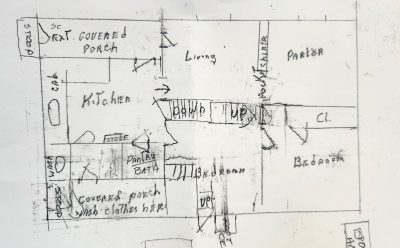
Mom and Dad’s bedroom was right off the kitchen. The boys’ bedroom was behind my parent’s bedroom and since there were no hallways, we had to walk through our parent’s bedroom to get to our room.
Also, our bedroom was open to the stairwell that went upstairs to my Grandma’s place, so my Grandma and Grandpa would use those stairs and walk through our bedroom and through my parent’s bedroom to get to our kitchen.

My sister, MaryAnn, slept in the room next to us on the NW corner of the house, which was really the Parlor. There was a large double wood pocket door between the Living Room and my sister’s Bedroom/Parlor so she walked through the Living Room each night to go to bed. There was a 4-5 foot closet in our room, but my sister did not have a closet.
When I was growing up, my brother Tom and I slept in the same bed. When my little brother, Gerry was born, he slept in the same room as Tom and I. Our bedroom was in the NE corner of the house. There was no heat in any of the bedrooms, so in the winter it was really cold but we only used our bedrooms for sleeping. We wore our long winter underwear to bed each night that we wore all winter days and nights to keep warm.

We had a 6-inch feather bed, as they were called, made from the down of ducks and geese. That feather bed kept us toasty warm at night. The ladies of the house would make these big feather beds. The down from farm birds was the soft plumage and since we raised chickens, we had plenty of down. This down was put between two cloth sheets with strips of yarn with fancy knots, holding the cloth and down together in place about 10-inches apart.
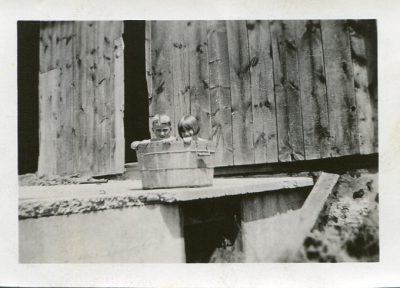
There was a side porch on our house, which was a multi-purpose room and a wash room that was located just off the kitchen. The wash room had a hand pump and a wash basin to wash up before you entered the house living area. The water for washing was hand pumped from the cistern in the basement.
The side porch had a natural gas stove that Mom used only during the summer, as Mom worried about gas leaks. The gas stove was located in the side porch so there would be good air flow. In the summer time when the kitchen stove was not being used, we used this gas range for heating the water for washing and for cooking.
Our washing machine was also located in the side porch, along with a wash tub. Our washing machine was powered by gasoline. There was a hole in the floor of the porch that held a pipe to vent the fumes outside. Someone would have to pull a cord, just like a lawnmower, to start the washing machine. Mom would then hang the clothes out on the clothesline. If it was bitter cold or snowing, she would hang them on a line in the kitchen to dry.
Our kitchen was like this until I got back from the Army in 1953. Then Dad and I remodeled our kitchen. I made the cabinets and we put in the bathroom. There weren’t any cabinets or shelves in the kitchen at all before this. None of the houses had cabinets back then. There was a six-foot by eight-foot pantry room off the kitchen and everything was in that.
I built the cabinets that we installed in the kitchen to replace the pantry, and we got the first refrigerator we ever had. Before then, the basement was used as a cold room as the ground was about 50 degrees at all times.
After the remodel, the pantry then became the bathroom. We did not have an indoor bathroom until that time. Before that, it was the outhouse. I did the whole first plumbing in the house. I put in the bathtub, the toilet and the kitchen sink.

Hugo Minz, a good friend of Dad’s, had just started his supply company at that time. He talked us into it. We bought all the supplies from him and he guided me through it. He kind of knew how it was supposed to be.
Dad and I worked on this project at night after I had worked all day at my first construction job with JRV Construction and after Dad was done with all the farm work. We did the plumbing and remodel for Grandma too. All of that work was done in one project.
Grandma lived upstairs from us and she lived almost always in just the kitchen or her bedroom.
I say Grandma because Grandpa died when I was a young boy, so mostly I remember it as Grandma’s. There was an exterior side entrance that came up into Grandma’s kitchen and an interior stairwell that came from the main level of the house to an upstairs hallway, between the bedrooms and the living room.
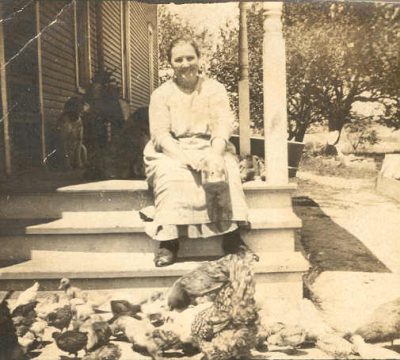
Grandma had a gas stove in the kitchen for cooking and to heat her kitchen and bedroom. She also did have a wood burning stove in the kitchen, but I don’t remember it ever being used, as she did get some heat from our home below.
She also had a stove that she would light to heat her Living Room if she was having relation over. Even though she had three sources of heat, I doubt Grandma’s quarters ever got too warm in the winter though, as the whole house was not insulated and even a very slight breeze would move the curtains inside the house.
The basement of our house held the water cistern and the fruit cellar. The fruit cellar was in a corner of the basement, so that there were two cooler walls there. Potatoes, cabbage, and carrots were all stored in bins in the fruit cellar. In addition, all the canned goods were stored there too. The fruit cellar usually maintained about a 50 degree temperature.

Most of the water for household uses was water that came off the house roof by way of downspouts to a cistern in the basement. A hand pump was used to pump the water from the cistern for washing clothes, baths, and everything but drinking and cooking. My Grandma had a hand pump upstairs that she could pump out of the cistern too. I’m sure it took longer for her pump the water, as it had to go up to the second story of our house.
We got our drinking water from the well down by the barn. It was pumped into a pail and we would carry the pail about 400’ to our house. The pail was set on the counter by the cistern pump. There was a dipper in the pail to get a drink. We used the well water for drinking and cooking.
Click HERE for more stories from the farm by Dave Bohn
In 1936, water came into the house. Prior to that there was a hand-dug well about 30-feet deep. In 1936, we had a well drilled and then water came out of that well and the hand dug well was abandoned. After 1936, the cistern continued to be used for wash water.
The big white house that we called home no longer sits on the brow of the hill as it once did. Our house is long gone now, but there are still some old farmhouses around.
These old farmhouses that once stood on the small farms formed the way people lived. This, in my opinion, was the time period when the most change took place and what formed the way my life was lived as a boy growing up in the Wisconsin farm country.