





West Bend, WI – Washingtoncountyinsider.com is going back to the 80th reunion that was held for the West Bend High School class of 1935 in 2015. There were 86 students in the graduating class.
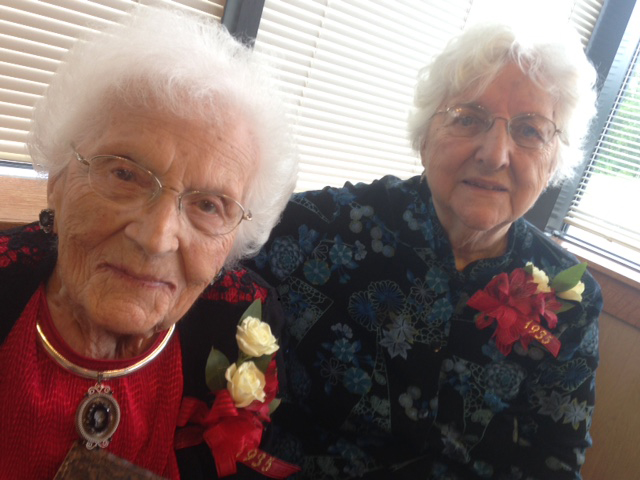
The two remaining students, Lillian Moritz Oelhafen and Frieda Kaehny Hauser, met for breakfast at Perkins Restaurant in West Bend.
There were quite a few portions of conversation left out of Saturday’s article and the following are some of those random segments as the two 98-year-olds reminisced about their days growing up and working in West Bend.
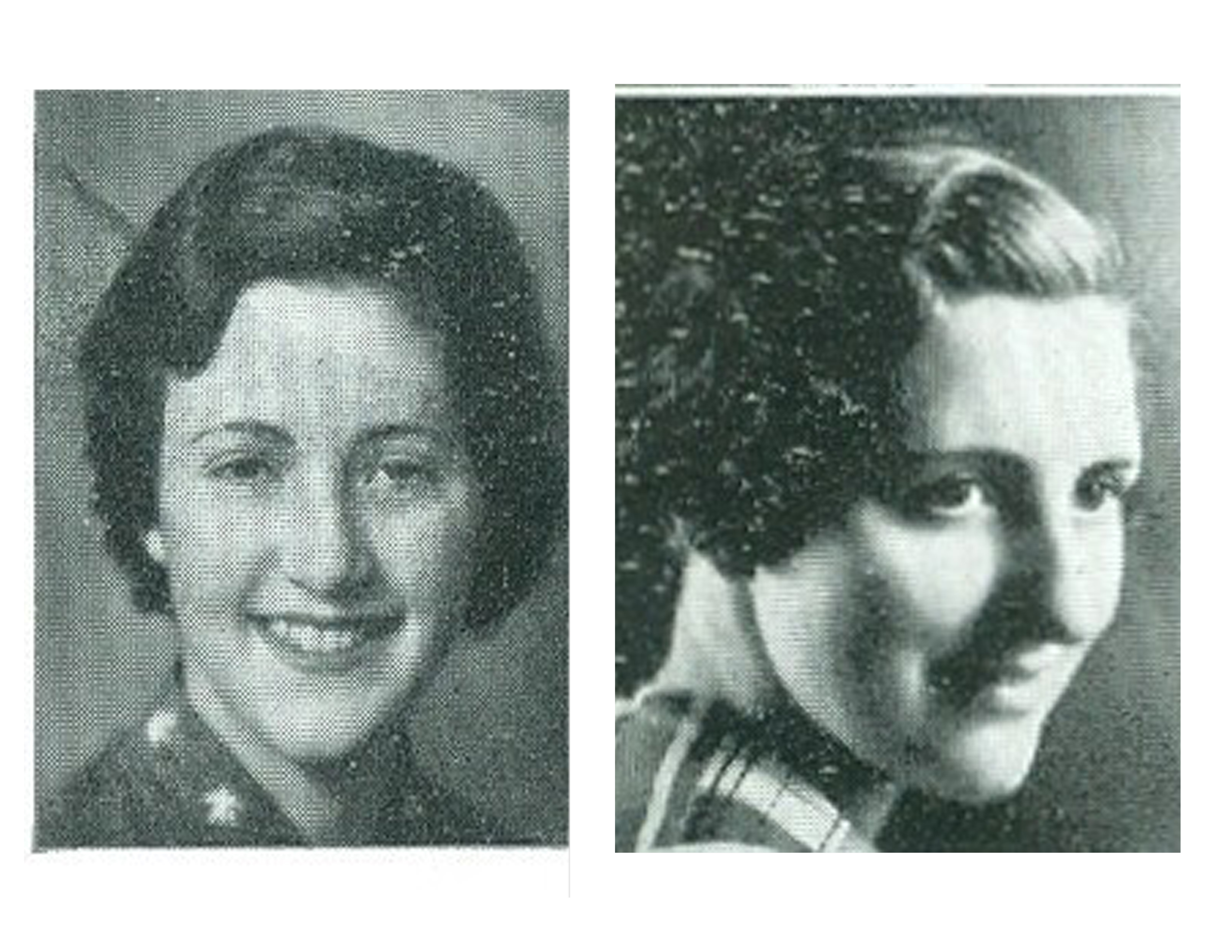
School days
The principal at West Bend High School in 1935 was D.E. McLane.
The topic of school lunch was rather popular and sparked quite a few memories. “Whatever our mothers packed we had for lunch,” said Frieda.
“I had only cold sandwiches in high school,” said Lillian. “In the winter when we’d walk to school and it would be very cold we’d get to school and our lunch was half frozen. We’d put it near the big belly stove and by the time we got to eat it had thawed.”
Lillian also recalled a prankster who rummaged through her lunch. “There was a boy in school who would steal the meat out of my sandwich,” Lillian said. “He’s long gone now but I still don’t like him.”
“I also had taken fresh strawberries in a jar in my lunch and that stinker went and put salt on my strawberries and when I went to get them – they were done and was I upset,” she steamed.

The Depression
“We would exchange coupons during the Depression,” said Lillian. “We raised our own meat so we had meat coupons and people we knew in Milwaukee had coffee coupons. They would give us the coffee and we would give them the meat.”
Lillian got married in 1939 to Harry Oelhafen. “He was a teacher in grade school,” said Lillian. “He was my teacher in eighth grade. There was a 10 year age difference.”
“We always thought you were too young for him,” teased Frieda.
Frieda got married in 1942 to Harold Hauser, who was a salesman for Mrs. Karl’s Bakery.
Telephone and polio
“We had a telephone in Kohlsville,” said Lillian. “But a lot of the neighbors did not so they would come to our house to do all their doctor calls. Our next-door neighbor, their son died of polio but they would come to use the telephone my door was always open but when they left I was disinfecting. I was so worried I’d get it.”
One young man who survived polio ended up going to work at Disney World. “Each year he would come home to visit his brother and he’d stop to see me because he remembers that support,” said Lillian. “It’s nice he remembers what I really did.”
Generation of change and technology
Frieda’s daughter Trudy talked about how the generation of her mom and Lillian had lived through some of the greatest changes in the century. “I’ve got an iPad,” said Lillian. “I’m writing a cookbook.”
Lillian is also writing her memoirs which include the story about the ice house and the mill.
Lillian grew up in Kohlsville across from what is now Jug’s Hitching Post. “My great grandparents, Ferdinand and Wilhelmina Sell, emigrated from Germany and came to America on their honeymoon in the 1800s,” said Lillian.
The couple set up their homestead in the Kohlsville area because it reminded them of their home in Germany. Ferdinand bought the local sawmill in 1893. There was also a grist mill by the lower pond and during winter they’d harvest ice.
“The ice could not have snow in it, it had to be clear ice,” she said. “They would have a big crosscut saw, it took two men to handle it and they would saw blocks of ice 12 -15 inches square.”
Lillian remembered the ice was stored in a shed, where the Hitching Post parking lot is now. “They had a lot of sawdust from the mill and the ice was preserved in the sawdust,” she said. “They would have a layer of ice and a layer of sawdust and it was amazing how that ice stayed preserved.”
Otto Moritz married the Sell’s daughter and helped run the mill, which eventually became known as the Sell and Moritz Mill.
Lillian said her great grandparents lived in a home that had 16 rooms because “if they employed men they had to give them lodging.” She said the home still exists today, across the road from the Hitching Post.
“After the men cut the ice, they’d load the blocks on a big bobsled,” said Lillian. “Big strong draft horses would pull the sled to the ice shed.”
Lillian said the process was a dangerous business. “Farmers Frank and Ernest Rusch, they were bachelors, they had a good strong team of draft horses,” she said. “They came with their bobsled and load it up to haul ice to the shed and one day they broke through the ice and the horses drowned. It was just horrible.”
Boldt Drug Store
“We were working at the Ziegler Company and every afternoon we’d have somebody go over to R.W. Boldt Drug Store,” said Lillian. “We’d order a phosphate or soda and one person would go and they’d take the order and get it filled and bring it back to the office for a snack. I usually got a phosphate or raspberry sundae.”