


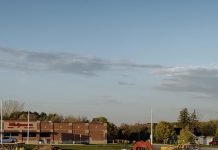
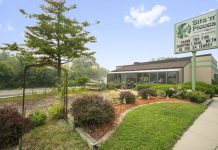

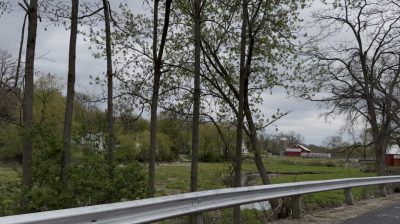
May 2, 2026 – Kohlsville, Wi – It is a rather eerie sight to look at the Kohlsville Millpond. Normally a large body of water in a hamlet setting, now the space stands full of greenery with a simple creek winding its way under the County Highway W bridge.
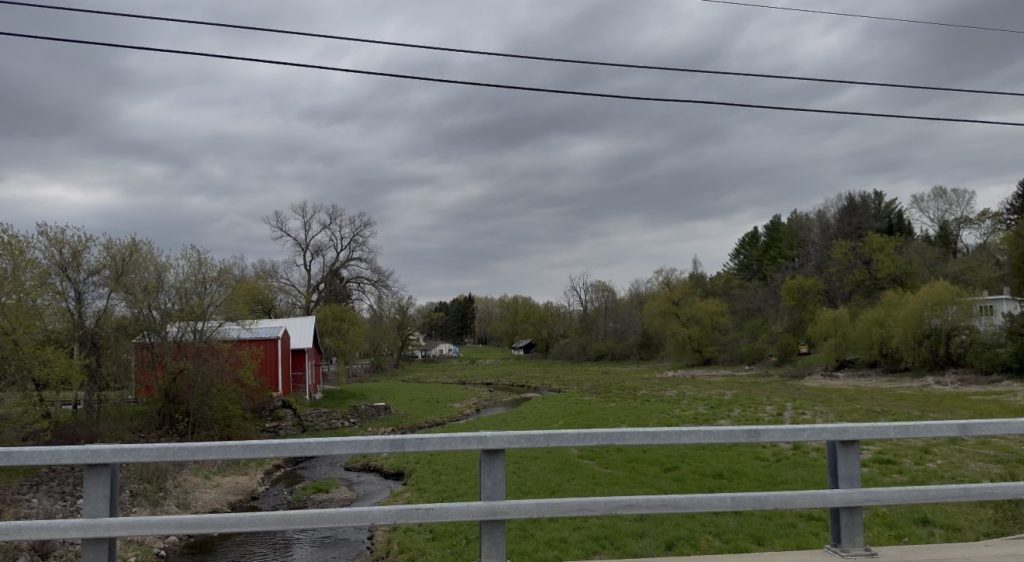
The current situation is all part of a long-awaited dredging project. The millpond itself, created by damming the Kohlsville River, has long served as a modest but meaningful centerpiece of the Town of Wayne.
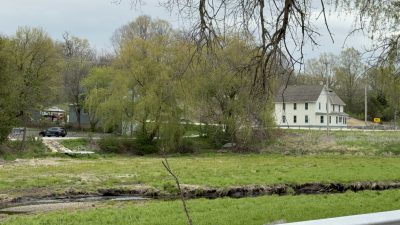
Time and sediment, however, have taken its toll, leaving the pond shallow and in need of restoration.
Town of Wayne Treasurer Gerald Schultz said, “Right around 1961… that’s when it was last dredged.”

That stretch of decades has allowed layers of sediment to quietly accumulate, carried in by the creek feeding the pond. When the water was drained last spring to repair the dam, the reality became clear.
“We drained the pond last spring… to fix the dams,” Schultz said. “Then I noticed there was very little water left in there because it was all soil and stuff that came in from the creek.”
That discovery set the stage for the current dredging plan, though timing depends on nature’s cooperation.
“We have to let it dry out good before we get in there with equipment,” he said. “We plan on getting the equipment in there this summer sometime.”
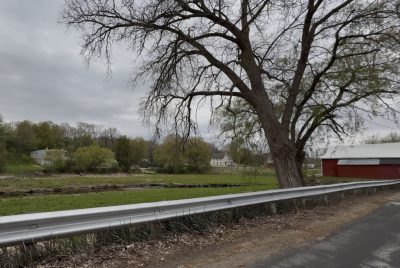
Town of Wayne Chairman Tony Balistreri has been part of the project from the start. He explained the mechanics behind the dredging effort, including how an unsigned flyer circulating in the community raised eyebrows but ultimately pointed to a legitimate grassroots fundraising push.
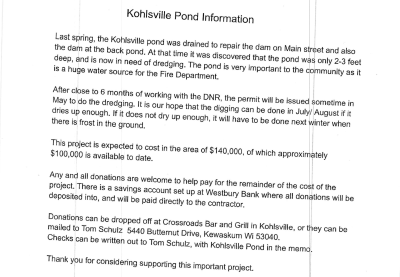
“What happened… is Tom Schultz… has kind of taken it up between the fire department and the tavern to try to raise money towards that,” Balistreri said.
A flier, above, explained what was involved. Balestreri said in order for donations to be tax-deductible, they have to be made to the Kohlsville Fire Department.

Early dredging estimates of around $100,000 have climbed to approximately $140,000 after further testing revealed deeper sediment than expected.
“They went and did some test samples… and there’s areas much deeper in sediment than we first thought,” Balistreri said. “So there’s a lot more that has to come out of there.”
Still, the town has assembled a creative funding patchwork rather than turning to taxpayers.
Instead, savings from completed town projects, contributions from the fire department, and donations from local groups have built a foundation of roughly $100,000 so far.
“We saved like $49,000… just by doing things ourselves rather than hiring contractors,” Balistreri said. “The fire department has matched it and Kohlsville Kruisers have committed a substantial donation.”
Additional funds are being raised through raffles and community donations, often centered around local gathering spots.
With permitting from the Wisconsin DNR underway and expected in the coming weeks, the project is poised to move forward once conditions allow.
“The earliest we could get the permit would be May 11… the latest would be like June 11,” Balistreri said.
From there, timing hinges on how dry the pond bed becomes. If conditions align, dredging could begin later this summer. If not, winter’s frozen ground may provide the necessary access for heavy equipment.
The actual dredging, Balistreri noted, will be relatively swift.
“The dredging itself shouldn’t take too long, a few weeks,” he said.
Looking beyond the excavation, the vision is to restore the pond closer to its original depth of eight to 10 feet and revive its recreational value.
“We’ll try to provide an access… for a canoe or a kayak,” he said. “And hopefully stock it with fish again and it’ll be good for another 60 years.”
On a side note:
– With the guts of the millpond exposed, Balestreri said he was a little shocked at the lack of debris in the riverbed. “We found a door knob assembly and a folding lawn chair.”
-Lillian Oelhafen grew up in Kohlsville across from what is now Jug’s Hitching Post. “My great grandparents, Ferdinand and Wilhelmina Sell, emigrated from Germany and came to America on their honeymoon in the 1800s,” said Lillian. Oelhafen passed in March 2017 but her memories, including the one below, were documented at WashingtonCountyInsider.com.
The couple set up their homestead in the Kohlsville area because it reminded them of their home in Germany. Ferdinand bought the local saw mill in 1893. There was also a grist mill by the lower pond and during winter they’d harvest ice.
“The ice could not have snow in it, it had to be clear ice,” she said. “They would have a big cross-cut saw, it took two men to handle it and they would saw blocks of ice 12 -15 inches square.”

Lillian remembered the ice was stored in a shed, where the Hitching Post parking lot is now. “They had a lot of saw dust from the mill and the ice was preserved in the sawdust,” she said. “They would have a layer of ice and a layer of saw dust and it was amazing how that ice stayed preserved.”
Otto Moritz married the Sell’s daughter and helped run the mill, which eventually became known as the Sell and Moritz Mill.
Lillian said her great grandparents lived in a home that had 16 rooms because “if they employed men they had to give them lodging.” She said the home still exists today, across the road from the Hitching Post.
“After the men cut the ice, they’d load the blocks on a big bobsled,” said Lillian. “Big strong draft horses would pull the sled to the ice shed.”
Lillian said the process was a dangerous business. “Farmers Frank and Ernest Rusch, they were bachelors, they had a good strong team of draft horses,” she said. “They came with their bobsled and load it up to haul ice to the shed and one day they broke through the ice and the horses drowned. It was just horrible.”
-Questioned if the pond was dredged if the sled would resurface, Schultz said, “That was actually done in the back pond. There’s two ponds… the second one is a lot deeper and that’s where the horses went in.”
That back pond, he noted, remains untouched by the current project and still holds its mysteries beneath deeper waters.