





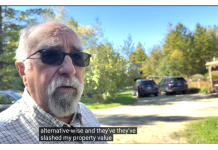

September 2, 2026 – West Bend, Wi — As Washington County supervisors consider changes to how emergency medical services (EMS) are funded and delivered, the President of Lifestar Emergency Medical Services, LLC Mike Krueger said he has more questions than answers — and he believes his company should have been part of the conversation from the beginning.

Lifestar, which has operated in the area for more than three decades, provides ambulance service in Slinger, portions of the towns of Polk and West Bend, and communities throughout several Wisconsin counties. Krueger said the company currently has 11 stations and 21 ambulances and provides 911 service to approximately 89,000 people.
Despite Lifestar’s size and experience, Krueger said he has not been included in many of the discussions surrounding Washington County’s proposed EMS changes.
“The meetings that I go to are ones that I invite myself to,” Krueger said. “We’ve never been asked to be at those meetings and part of that discussion.”
Krueger said he finds that particularly unusual because Lifestar is one of the areas largest ambulance providers.
“We’re the largest ambulance in the county. And we have a ton of experience,” he said. “We have a different viewpoint, and I think that brings a different perspective to the issue instead of always looking at it through the same lens.”
Krueger said that perspective could be useful as county officials examine the future cost and structure of EMS.

Lifestar began in 1995 providing interfacility ambulance transfers, such as transporting patients between hospitals and nursing homes. In 2001, the company successfully bid to provide 911 ambulance service to Slinger and surrounding areas.
The company also brought paramedic service to Washington County.
“We’re actually the service that brought paramedic service to Washington County in 2003,” Krueger said. “Prior to us, nobody in Washington County was offering paramedic service. And we’ve continued that since.”
Unlike many municipal EMS operations, according to Krueger, Lifestar operates without a municipal subsidy in the Washington County communities it serves.
“We don’t have the municipality that we can generally fall back on because we have a $0 municipal subsidy around here,” he said.
That means the company must rely primarily on reimbursement from patients’ insurance, Medicare, Medicaid and commercial insurers.
“We have to look at our operations. We have to make sure we’re not spending money on excess because if we go over budget, there’s no coffers from a municipality to go back to and ask for more,” Krueger said.
The central message from Krueger
Krueger is not arguing that Washington County should do nothing. He’s arguing that the county should slow down, provide more specifics, examine cost controls, include all EMS providers in the discussion, and avoid pushing a plan through primarily because officials believe they have to “get over the finish line.”
That business model, according to Krueger, forces Lifestar to closely monitor expenses, staffing, equipment purchases and other operational costs.
“We watch all parts of our operation,” he said.
Krueger said Lifestar also uses group purchasing arrangements to reduce the cost of equipment and supplies and deliberately avoids unnecessary features when purchasing ambulances.
“We don’t spend extra money on lots of extra options,” he said. “We watch those purchases.”
He said Lifestar’s ambulance rates are approximately 70% of the Wisconsin average.
While Washington County officials and local communities have discussed staffing and financial pressures facing EMS, Krueger does not believe the system as a whole should be characterized as being in crisis.
“I don’t think we’re in crisis,” he said. “I think it’s different than it used to be.”
He acknowledged that staffing has become more difficult and that EMS providers face demanding working conditions, including long shifts, overnight calls and difficult interactions with some patients.
Still, he said the profession continues to attract people who want to help others.

“Ultimately people want to help people,” Krueger said. “They love the medical side of it and that they’re able to provide personal care sometimes, oftentimes in a very bad day for them, or to make them better.”
When looking at the county EMS proposal, Krueger said his primary concern is not that officials are attempting to address the issue, but that he has not seen enough detail showing how the proposed changes will control long-term costs.
“I have not seen anything that shows how those costs would be cut,” he said.
He pointed to county projections showing the per-capita cost of EMS rising substantially over time if current trends continue.
Krueger said he hopes his experience operating an EMS system without municipal subsidies could help identify ways to control those costs.
“Hopefully I could bring some things to the table that would allow for those costs to be contained,” he said.
He also questioned whether simply providing additional money to departments will address the underlying problems.
“I do think that they’re trying to throw money at something without really looking for a solution, the root cause,” Krueger said.
He said any funding plan needs clearly defined goals and accountability for how the money is spent.
“Those smart goals need to be worked out,” he said.
Krueger also questioned how proposed annual funding increases would be determined and whether they would keep pace with the rising cost of providing service.
“It’s been said by multiple people at the county that costs for fire departments or costs for the service has been going up 7 to 10% per year,” he said. “So if the county is only giving a 2 to 4% bump generally, you can’t keep up with a 7 to 10% increase.”
Another concern for Krueger is the county’s approach using “fear” and the suggestion that private ambulance companies represent an inherent risk because they could potentially close or be sold.
He said private businesses can fail, but so can municipal and volunteer EMS organizations.
“I really don’t appreciate the fear marketing, which was done all around this,” Krueger said.
Lifestar, he said, has no intention of walking away from the communities it serves.
“This is our livelihood for myself, for our family, for the employees that we employ and the people that work here,” he said. “We’re over 30 years in business now and still going strong.”

Krueger acknowledged, some ambulance providers have ceased operations, but noted there are also numerous private and hospital-affiliated EMS organizations that continue to provide successful 911 service.
“There are a lot of them that are still in business as well,” he said.
Krueger said Lifestar’s private, for-profit status has sometimes become a point of criticism during the EMS debate.
He rejects the idea that being for-profit means the company is motivated primarily by money.
“We get beat up because we’re for-profit,” he said. “Like, somehow that makes us greedy, but I can tell you that running a $0 contract for 25 years, you know, obviously no increase that is not greedy.”
Krueger said the company could pursue other options but continues to operate in the communities it serves.
“We’re here to serve the communities that we do,” he said.

Lifestar also provides ambulance coverage for community events, often without charge, according to Krueger.
The company participates in events such as Touch-a-Truck, sporting events, races and other community activities. Crews also provide tours of ambulances to community groups.
Those activities, he said, are part of Lifestar’s effort to remain connected to the communities it serves.
Ultimately, Krueger said he is not opposed to Washington County examining its EMS system or finding ways to provide financial assistance.
He simply wants more answers before a major change is approved.
“If there’s a more clear plan, determined with more answers, given the process is a little more transparent, through the county, perhaps there could be some benefit from this process,” he said.
But he worries officials could move too quickly because the county has been studying EMS for years.
“They’ve been working on it for a lot of years, but those discussions really, they’re new this year where the meat of the solution or a potential solution has been discussed,” Krueger said.
His concern is that the length of the study could become an argument for approving a plan before all of the details have been resolved.
“I worry that it’s going to be, you know, we’ve been working on this for six years, we’ve got to get over the finish line and try to get something pushed through in the next month or two at the most,” he said.
For Krueger, the issue ultimately comes down to making sure new funding produces a sustainable EMS system rather than simply postponing the financial problems.
-County executive Josh Schoemann was asked during the Town of Trenton listening session what Lifestar had to say at the EMS meetings held over the past three years. Schoemann said Mike Krueger was at “at least half the meetings.” Krueger contends, “We’ve never been asked to be at those meetings and part of that discussion.”
-The Public Safety Committee meets at 4 p.m. today at the Herbert J. Tennies Government Center – Room 1019 432 E. Washington Street, West Bend, WI. The committee will look to approve a resolution to authorizing the creation of a Washington County countywide EMS system. The meeting is open to the public.