



October 29, 2026 —Richfield, Wi – Rownd Inc. is bringing artificial intelligence and autonomous drone technology to Washington County, WI, opening a research and development center in the Village of Richfield as the company works to keep pace with rapidly changing defense technology.
The company announced a $10 million contract with the Department of War, along with other contracts supporting its efforts to develop cost-effective drones that can operate autonomously and be replaced quickly if lost in the field.
Robert Thelen, CEO and co-founder of Rownd, said the technology is advancing at an unprecedented pace, creating a need for companies to continually update their systems and get new capabilities into the hands of military personnel.

“The pace of innovation is unmatched in any war or any conflict in history,” Thelen said, pointing to developments in Ukraine and Iran.
He said military technology that once took years to evolve now can change in a matter of weeks.
“Russians are coming out with innovations on a weekly basis that try to get around Ukrainian defenses,” Thelen said. “Ukrainian defenses figure it out and start to shoot down more Russian drones and just go back and forth like that.”
Thelen said the United States needs to be prepared for that pace of change.
“It’s a cat-and-mouse game and we as Americans are not ready for that,” he said. “So we’re trying to get the technology out there so when we are in a real war we’re ready for it.”
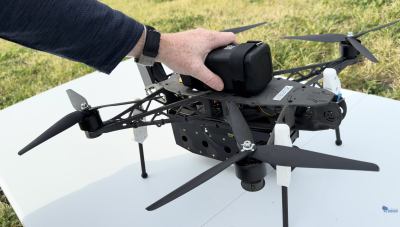
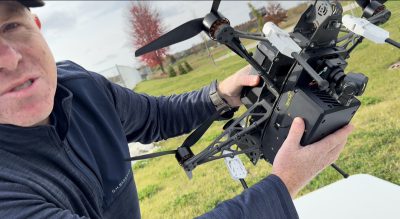
During a demonstration, Thelen explained how a Rownd quadcopter uses onboard computers, artificial intelligence and sensors to carry out tasks without requiring a pilot to control every movement.

The drone has four propellers and a large battery that allows it to remain airborne for 45 minutes to an hour. It can travel up to 15 kilometers, or about 9.3 miles, and reach speeds estimated at 45 to 50 mph.
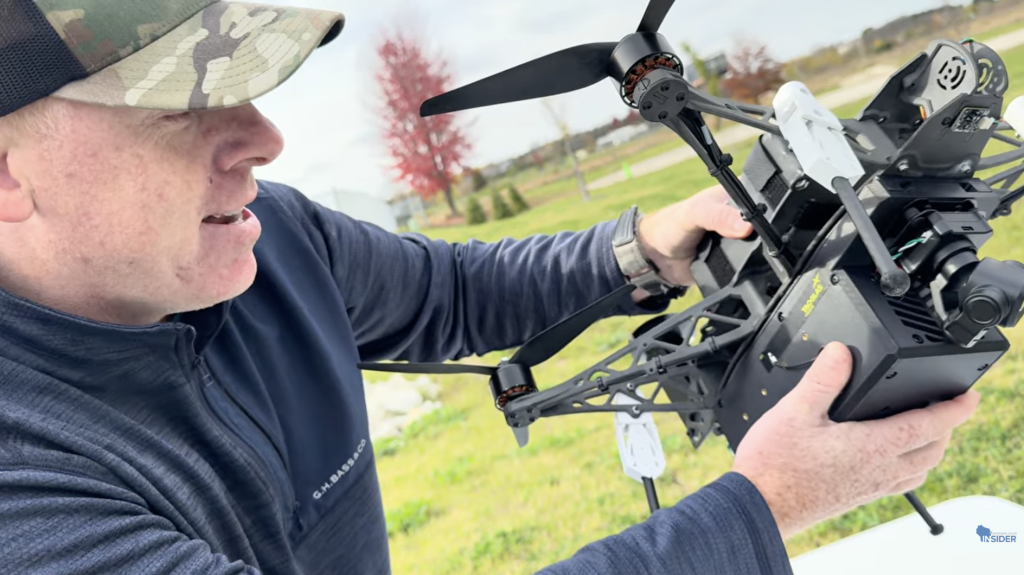
A camera mounted on a gimbal captures 4K video, while onboard hardware houses the graphics processing unit, AI software and radios.
Thelen said the drone can analyze images as it flies, breaking a high-resolution image into smaller sections so its computer vision system can quickly identify objects such as cars, trucks and people.
The system is designed to make decisions onboard rather than relying on a continuous connection to a remote computer.
“Again, we just tell it what to do and it does the rest,” Thelen said.
The drone can carry a payload of about 2.5 kilograms, or 5.5 pounds, over a distance of approximately 15 kilometers under the described configuration. Although it has the lifting capacity for heavier loads, Thelen said additional weight reduces its range.
The drone can also be controlled through an LTE connection if its radio signal is lost beyond the horizon, he said.
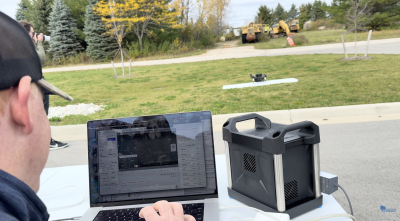
One of the biggest changes in autonomous drone technology is the ability to operate multiple aircraft without assigning an individual pilot to each one.
Thelen said Rownd intentionally moved away from traditional handheld controllers for the drones used in its system. Instead of directing every movement, an operator can assign a task and let the onboard AI determine how to complete it.

“The coolest thing about these drones is the fact that the pilot is basically on board it,” Thelen said.
An operator could direct a drone to search a field, for example, and the aircraft would determine how to cover the area. Multiple drones could divide the work and operate together.
“We can put up 10 drones that split up the field and do it all by themselves and then come back home,” he said.
Thelen said the company’s focus is on making drones increasingly autonomous while increasing the number that can operate at the same time.
The approach also changes the role of the human operator.
“It’s trying to move someone from like the doing job to the leadership job,” he said. Rather than directing every step, the operator delegates the task and oversees the operation.
Rownd’s broader system is designed to allow drones to coordinate and make decisions even when they lose a connection to centralized control.
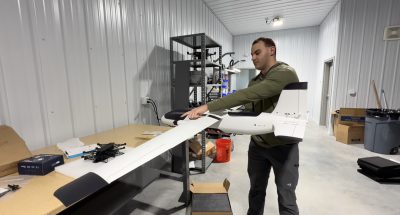
Thelen sees autonomous systems as a growing employment field that extends well beyond defense.
“It’s huge,” he said. “This is where all AI is going.”
He described AI that can move physical objects and operate vehicles, drones and boats as an important area of development.
The same technology could be used in agriculture to collect data about farms, apply fertilizer to specific plants or target weeds with pesticides instead of treating an entire field. Autonomous systems also could help monitor sites and gather information without requiring personnel to be physically present for every observation.

Those applications could help organizations use resources more efficiently while creating new jobs in manufacturing, software development and autonomy engineering.
“Also those jobs are just going to explode,” Thelen said.
Rownd expects its expansion in Wisconsin and North Carolina to create 22 careers, including next-generation manufacturing positions and jobs developing autonomous systems.
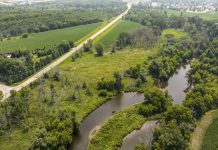
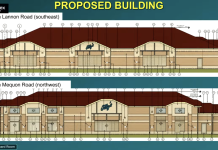
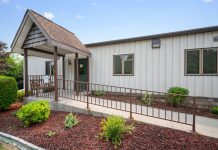
The company is establishing its Wisconsin research and development center in Richfield, bringing defense technology work to a community that might not traditionally be associated with the industry.
“That’s really why we want to open these centers up here is to get as many people employed in this high growth area as possible in places that people don’t think about having defense tech jobs,” Thelen said.
In October, Rownd tested its autonomy software during a three-day exercise with Air Force personnel in Alabama. According to the company, quadcopters completed 41 flights, including four mobile flights and four fleet tests with AI running onboard.
The exercise also marked the first time Rownd flew a drone swarm, launching as many as three drones simultaneously.
The team used flight data collected each day to retrain the drones’ computer vision models. Updated models were then loaded onto the aircraft before the following day’s missions, resulting in improved accuracy, according to Rownd.

The process reflects the company’s approach of using field experience to make rapid improvements to its software, AI models and hardware.
Thelen said the technology used in combat must be designed with the expectation that it will need frequent updates.
“At Rownd, we’re focused on attritable mass,” Thelen said. “That means sending more drones into combat that are easy to launch, easy to control, and can be quickly replaced if lost on the battlefield.”
He said the goal is to support continuous missions while prioritizing the safety of American military personnel.

ABOUT ROWND
Rownd is a Y Combinator-backed defense autonomy company. Its mission is to protect the United States through its economical, attritable and autonomous drones. Rownd was founded by a combat veteran and x-IBMers. The company currently has multiple contracts with the Department of War. Rownd is headquartered in Raleigh, North Carolina, with flight-test operations in Richfield, Wisconsin. More information is available at rownd.com.




Rownd says jobs will explode in manufacturing of software development and autonomy engineering.
You’ll need humans for the manufacturing part, but as software development, I already use AI to develop its own software which it will come up with it’s own autonomy engineering.